

Why Are Vision Loss Cases Considered Catastrophic Injury Claims?
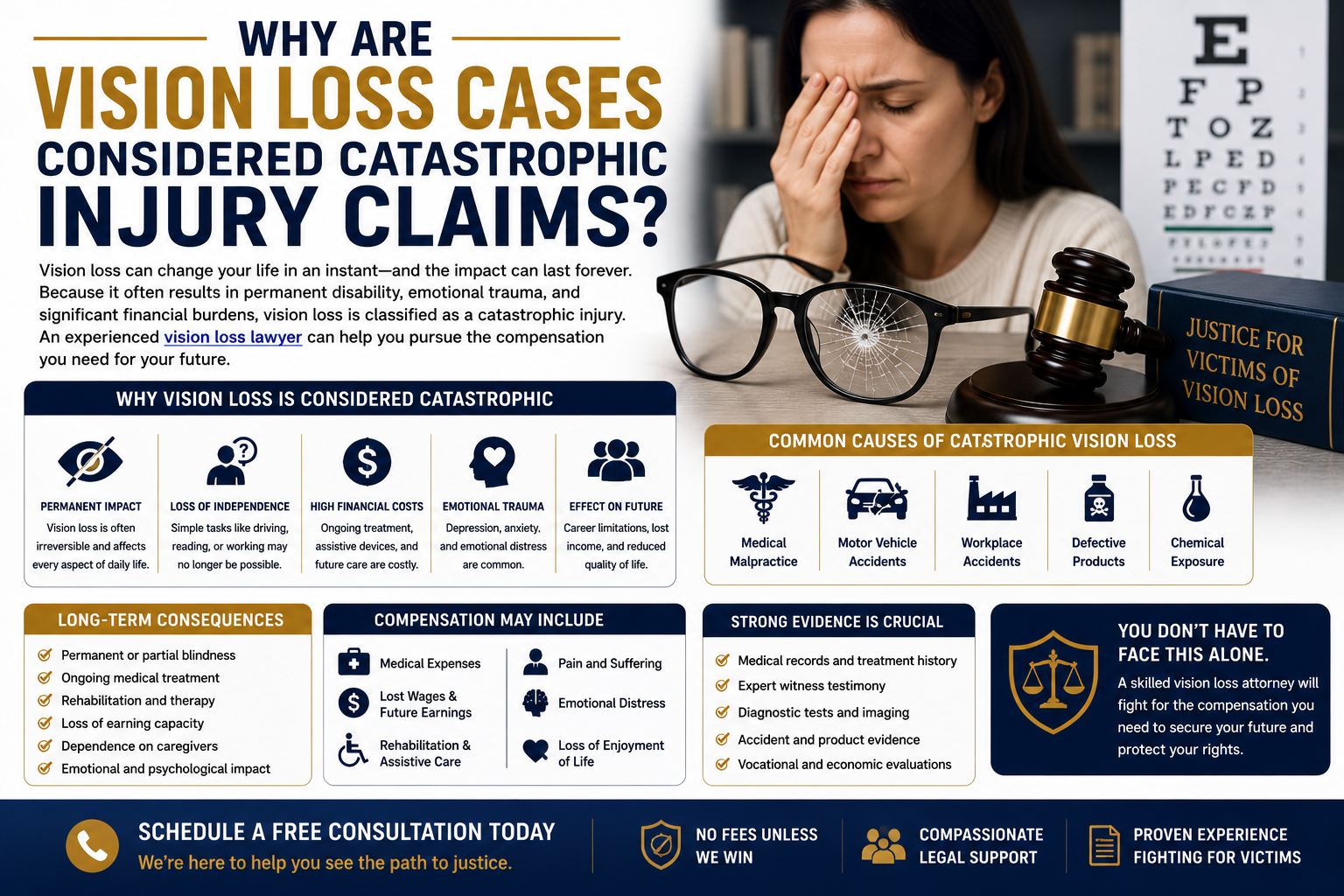
Losing your vision is one of the most life-altering injuries a person can experience. Unlike many injuries that heal over time, permanent vision loss often affects every aspect of daily living—from working and driving to maintaining independence and enjoying everyday activities. Because of its lifelong physical, emotional, and financial consequences, vision loss is frequently classified as a catastrophic injury under personal injury law. If your injury was caused by negligence, consulting an experienced legal counsel for catastrophic vision loss claims can help you understand your legal options and pursue the compensation needed for long-term care and recovery.
Catastrophic injury claims are often more complex than standard personal injury cases because they involve permanent disabilities, significant future expenses, and lasting changes to a victim's quality of life.
What Is a Catastrophic Injury?
A catastrophic injury is a severe injury that permanently affects a person's ability to function independently or perform everyday activities. These injuries often require ongoing medical treatment, rehabilitation, and lifelong support.
Examples of catastrophic injuries include:
-
Permanent blindness
-
Traumatic brain injuries (TBI)
-
Spinal cord injuries
-
Paralysis
-
Severe burns
-
Multiple amputations
-
Permanent neurological injuries
Vision loss is included in this category because it frequently results in irreversible physical limitations and substantial financial losses.
Why Vision Loss Is Considered Catastrophic
Vision plays a vital role in nearly every daily activity. Permanent damage to one or both eyes can drastically alter a person's personal, professional, and social life.
Individuals with significant vision loss may face:
-
Difficulty reading and writing
-
Loss of driving privileges
-
Reduced mobility
-
Workplace limitations
-
Increased dependence on caregivers
-
Challenges performing routine household tasks
-
Emotional and psychological distress
These long-term consequences often justify classifying vision loss as a catastrophic injury.
Common Causes of Catastrophic Vision Loss
Permanent vision loss may result from many different forms of negligence.
Common causes include:
Medical Malpractice
Errors by healthcare providers can lead to irreversible blindness.
Examples include:
-
Delayed diagnosis of glaucoma
-
Cataract surgery mistakes
-
LASIK complications
-
Failure to diagnose retinal detachment
-
Medication errors
-
Surgical negligence
Motor Vehicle Accidents
Car, truck, and motorcycle accidents can cause:
-
Orbital fractures
-
Optic nerve damage
-
Penetrating eye injuries
-
Traumatic retinal injuries
Defective Products
Dangerous products may expose users to:
-
Chemical burns
-
Flying debris
-
Explosions
-
Defective safety equipment
-
Faulty medical devices
Workplace Accidents
Construction sites, manufacturing facilities, and industrial workplaces often involve hazards that increase the risk of catastrophic eye injuries.
Long-Term Medical Consequences
Vision loss rarely ends with the initial injury.
Victims may require:
-
Multiple eye surgeries
-
Vision rehabilitation
-
Assistive technology
-
Occupational therapy
-
Mobility training
-
Psychological counseling
-
Prescription medications
-
Ongoing specialist care
Some individuals require medical treatment and support for the rest of their lives.
Financial Impact of Permanent Vision Loss
Catastrophic injuries frequently create enormous financial burdens.
Victims may experience:
-
Emergency medical expenses
-
Hospitalization
-
Surgical costs
-
Rehabilitation expenses
-
Lost wages
-
Reduced earning capacity
-
Future medical care
-
Home modifications
-
Transportation assistance
-
Assistive devices
The lifetime cost of living with permanent blindness can be substantial, making comprehensive compensation essential.
Emotional and Psychological Effects
The effects of vision loss extend far beyond physical limitations.
Many individuals experience:
-
Depression
-
Anxiety
-
Emotional trauma
-
Loss of confidence
-
Social isolation
-
Fear about the future
-
Loss of independence
These emotional injuries are often considered when determining compensation for pain and suffering.
Why Catastrophic Injury Claims Require Strong Evidence
Because catastrophic injury claims often involve significant compensation, insurance companies frequently challenge them.
A successful case typically includes:
-
Medical records
-
Ophthalmology evaluations
-
Diagnostic imaging
-
Surgical reports
-
Vision testing
-
Expert witness testimony
-
Vocational assessments
-
Economic loss evaluations
-
Rehabilitation records
Comprehensive documentation helps demonstrate both the severity of the injury and its long-term impact.
Compensation Available in Vision Loss Cases
Victims of catastrophic vision loss may recover compensation for both economic and non-economic damages.
Economic Damages
These damages compensate for measurable financial losses, including:
-
Medical expenses
-
Future healthcare costs
-
Rehabilitation
-
Lost income
-
Loss of future earning capacity
-
Home modifications
-
Assistive technology
-
Transportation costs
Non-Economic Damages
Victims may also seek compensation for:
-
Pain and suffering
-
Emotional distress
-
Mental anguish
-
Permanent disability
-
Loss of enjoyment of life
-
Loss of independence
Because vision loss often affects every area of life, these damages can represent a significant portion of the claim.
How a Vision Loss Lawyer Helps
Catastrophic injury cases require extensive preparation and expert support.
A vision loss lawyer can:
-
Investigate the cause of the injury
-
Gather medical evidence
-
Consult ophthalmologists and life-care planners
-
Work with vocational and economic experts
-
Calculate future damages
-
Negotiate with insurance companies
-
Represent clients during trial if necessary
Experienced legal representation helps ensure that both current and future losses are accurately valued.
Why Acting Quickly Matters
Every state has statutes of limitations that limit the amount of time available to file a lawsuit.
Seeking legal advice promptly allows your attorney to:
-
Preserve medical records
-
Secure expert testimony
-
Interview witnesses
-
Protect important evidence
-
Meet all legal deadlines
Taking early action can significantly strengthen your claim.
Conclusion
Vision loss cases are considered catastrophic injury claims because they often result in permanent disability, lifelong medical needs, emotional hardship, and significant financial losses. Whether the injury stems from medical malpractice, a vehicle collision, a defective product, or a workplace accident, victims deserve compensation that reflects the full impact of their injury.
An experienced vision loss lawyer can help investigate the cause of your blindness, gather the necessary evidence, and pursue compensation for your current and future needs. Acting quickly can protect your legal rights and improve your ability to recover the financial support needed to move forward.
Frequently Asked Questions
1. Why is vision loss considered a catastrophic injury?
Vision loss is often permanent and significantly affects a person's ability to work, live independently, and perform everyday activities, making it a catastrophic injury.
2. What types of accidents can cause catastrophic vision loss?
Medical malpractice, motor vehicle accidents, workplace incidents, defective products, and chemical exposures are common causes.
3. What compensation is available in a catastrophic vision loss case?
Victims may recover compensation for medical expenses, future care, lost wages, rehabilitation, pain and suffering, and reduced quality of life.
4. Do catastrophic injury claims require expert witnesses?
Yes. Ophthalmologists, vocational experts, economists, and life-care planners often provide testimony regarding the injury's long-term impact.
5. How can a vision loss lawyer help with my claim?
A lawyer can investigate the case, collect evidence, work with medical experts, negotiate with insurers, and pursue maximum compensation on your behalf.
 Portuguese
 English
 Arabic
 French
 Spanish
 Deutsch
 Turkish
 Dutch
Dutch
 Italiano
 Russian
 Romaian
 Portuguese (Brazil)
 Greek
Greek