

Branding for Startups in 2026: Building Trust Before You Have a Reputation
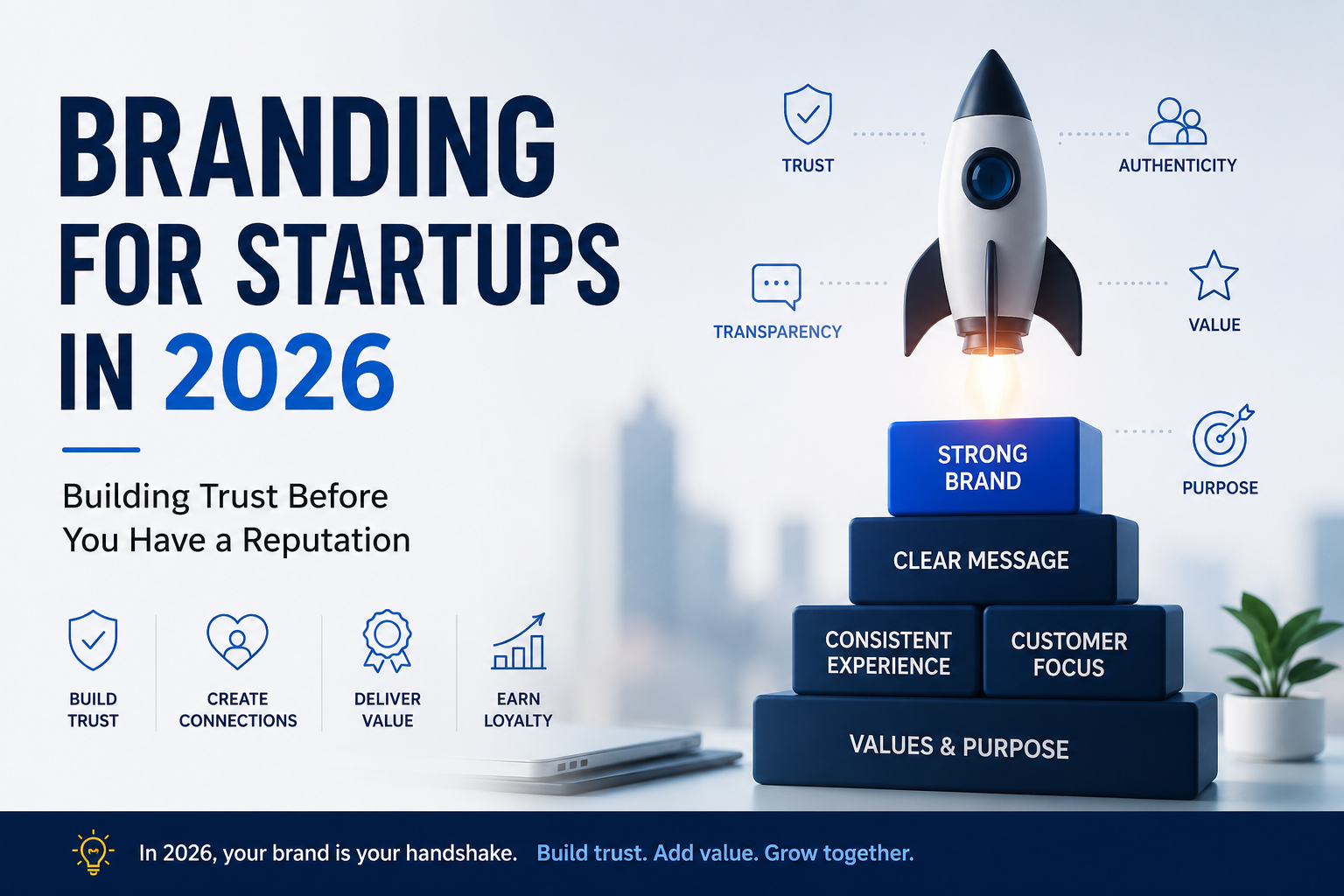
A new business has no reputation to lean on, which means branding for startups has to do work that established companies get for free — signaling trustworthiness before a single customer has a reason to believe it yet.
This covers what branding actually needs to accomplish at the startup stage, beyond a logo and a color palette.
What Branding Actually Does for a Startup
Branding for startups isn't decoration — it's a trust shortcut. A consistent, well-considered brand signals that a business is stable and credible before a visitor has read a single word of copy or checked a single review.
1. Positioning Comes Before Visual Identity
Before choosing colors or fonts, a startup needs a clear answer to who it serves and what specific problem it solves better than alternatives. Visual identity built before positioning tends to look generic, because it has nothing specific to express.
2. Consistency Matters More Than Polish Early On
A simple brand applied consistently across every touchpoint — website, social, packaging, invoices — builds more trust than an elaborate brand system used inconsistently.
3. Borrow Trust Signals Honestly
Early-stage businesses can legitimately build trust through founder transparency, real customer testimonials, and visible credentials, rather than trying to appear larger or more established than they are.
4. Design for the Channels Customers Actually Use
A brand system needs to hold up on a small mobile screen, in a WhatsApp message, and on a product package — not just on a polished desktop mockup.
Where This Fits Into Your Broader Strategy
For ecommerce startups specifically, brand consistency has to extend into the actual storefront experience, which is why brand and store build often happen together with a Shopify development services agency in Delhi rather than as two separate, disconnected projects.
Founders often start looking for the best digital marketing agency in Delhi at exactly this stage — once the product is ready but the brand and site haven't caught up to what the business has actually become.
A Startup Branding Framework
● Write a one-sentence positioning statement: who you serve, what problem, why you
● Define 3 brand attributes you want customers to associate with the business
● Build a simple, consistent visual system: logo, 2–3 colors, 1–2 fonts
● Apply it consistently across website, social, and packaging before expanding
● Collect and display real testimonials and credentials as they come in
Frequently Asked Questions
How much should a startup spend on branding?
Enough for a consistent, well-considered identity — elaborate brand systems are rarely worth the cost before product-market fit.
Do I need a brand strategy before a logo?
Yes — positioning should come first, since it determines what the visual identity needs to communicate.
How important is branding for an early-stage startup?
Very important for trust, but it shouldn't delay launch; a simple, consistent brand beats a perfect one that takes months.
Should my brand and website be built at the same time?
Ideally yes, especially for ecommerce, so the brand system and site experience stay consistent from day one.
Can I rebrand later without losing customers?
Yes, if the rebrand is communicated clearly and core trust signals like reviews and history are preserved through the transition.
Conclusion
Branding for startups is about earning trust faster than a business has had time to build a track record. Clear positioning, applied consistently, does more for a new company than an expensive rebrand ever will. MarketingBugs builds brand identity and the site experience together, so startups launch with both aligned from day one.
 English
 Arabic
 French
 Spanish
 Portuguese
 Deutsch
 Turkish
 Dutch
Dutch
 Italiano
 Russian
 Romaian
 Portuguese (Brazil)
 Greek
Greek