

US Automotive Data Cables Market Scope and Core Technological Drivers Forecasted to 2034
The modern automotive industry is undergoing a profound paradigm shift, transitioning from traditional mechanical transport into sophisticated, software-defined ecosystems on wheels. At the heart of this digital transformation is a complex, high-performance network of wiring and connectivity solutions. Among these, automotive data cables have emerged as critical infrastructure, acting as the nervous system that links advanced onboard computers, sensors, cameras, and communication modules. As vehicles become more autonomous, electrified, and connected, the demand for robust data transmission systems is scaling at an unprecedented rate.
Market Size and Growth Projections
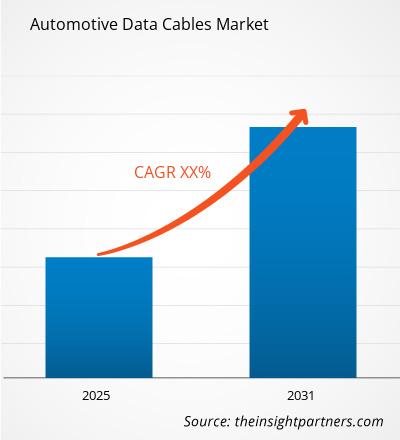
The market for these specialized connectivity components is on a steep upward trajectory, driven by the global integration of high-bandwidth digital systems in passenger and commercial vehicles. According to comprehensive market intelligence, the Automotive Data Cables Market is expected to register a CAGR of 6.74% from 2026 to 2034. Reflecting this steady expansion, the overall market size is projected to grow significantly from US$ 14.11 Billion in 2025 to an impressive US$ 25.38 Billion by 2034.
This robust growth is primarily fueled by the rapid mainstream adoption of Advanced Driver Assistance Systems (ADAS), the transition toward battery electric vehicles (EVs), and the consumer demand for immersive, next-generation in-vehicle infotainment (IVI) experiences.
Key Drivers Accelerating Market Expansion
Several macroeconomic and technological catalysts are propelling the automotive data cables market forward:
-
The Rise of ADAS and Autonomous Driving: Modern safety features such as lane-keep assist, automatic emergency braking, and 360-degree camera arrays generate massive volumes of real-time data. To ensure passenger safety, this data must be processed with near-zero latency, creating a strict requirement for high-speed data cables like coaxial and shielded twisted-pair (STP) lines.
-
Vehicle Electrification (EVs): Electric vehicles require intricate battery management systems (BMS) and power electronics that must communicate seamlessly while resisting high levels of electromagnetic interference (EMI). Specialized data cables with advanced shielding are vital to maintain signal integrity in these high-voltage environments.
-
Connected Car Ecosystems (V2X): Vehicles are increasingly communicating with their surroundings including other vehicles (V2V) and smart city infrastructure (V2I). Vehicle-to-Everything (V2X) communication relies heavily on fast, dependable internal network backbones to process external wireless signals instantaneously.
Get a PDF Sample– https://www.theinsightpartners.com/sample/TIPRE00019430
Technological Transformations in Cable Architecture
To accommodate the surging data loads within vehicles, automotive network architectures are evolving away from legacy configurations toward localized "zonal architectures." Traditional Controller Area Network (CAN) and Local Interconnect Network (LIN) setups are being supplemented or replaced by Automotive Ethernet and high-speed SerDes (Serializer/Deserializer) protocols.
Consequently, the physical cables themselves are changing. Manufacturers are shifting toward lighter materials such as thin-wall insulation and aluminum conductors to reduce overall vehicle weight and extend electric vehicle range, all while ensuring the cables can withstand extreme temperature fluctuations, mechanical vibrations, and exposure to automotive fluids.
Competitive Landscape and Key Players
The global marketplace is characterized by a mix of established tier-1 automotive suppliers and specialized cable manufacturers focusing on continuous material innovation and strategic partnerships with automakers. The following key players are leading the development and supply of next-generation automotive data cables:
-
ACOME Group
-
Amphenol Corporation
-
Champlain Cable Corporation
-
FURUKAWA ELECTRIC CO., LTD
-
HELUKABEL
-
HUBER+SUHNER AG
-
Leoni AG
-
Prysmian Group
-
Sampsistemi
-
YAZAKI Corporation
These companies are heavily investing in research and development to manufacture smaller, lighter, and more durable cabling solutions that meet stringent automotive safety standards while keeping production costs scalable.
Future Outlook
Looking ahead, the future of the automotive data cables market will be defined by the realization of fully autonomous transport and the universal adoption of software-defined vehicles (SDVs). As vehicles rely more on cloud computing and over-the-air (OTA) software updates, internal data architecture will mirror the infrastructure found in high-performance data centers. We can anticipate an increased commercial viability of automotive fiber-optic cables to support next-generation gigabit speeds, alongside a parallel emphasis on sustainable, recyclable cable insulation materials to meet global green manufacturing mandates. Ultimately, as automobiles evolve into interactive mobile technology hubs, the data cable market will remain a cornerstone of automotive innovation, securing its multi-billion-dollar expansion over the next decade.
Related Reports-
Automotive Control Cable Market
About Us
The Insight Partners is a one-stop industry research provider of actionable intelligence. We help our clients in getting solutions to their research requirements through our syndicated and consulting research services. We specialize in industries such as Semiconductor and Electronics, Aerospace and Defense, Automotive and Transportation, Biotechnology, Healthcare IT, Manufacturing and Construction, Medical Devices, Technology, Media, and Telecommunications, as well as chemicals and Materials.
 Deutsch
 English
 Arabic
 French
 Spanish
 Portuguese
 Turkish
 Dutch
Dutch
 Italiano
 Russian
 Romaian
 Portuguese (Brazil)
 Greek
Greek