


Advancing Service Provider Network Infrastructure for Modern Connectivity
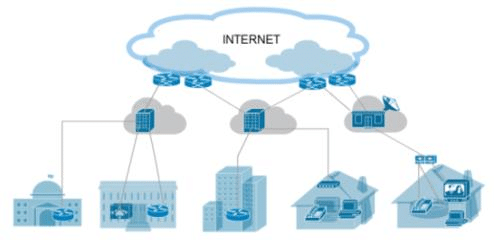
Service provider network infrastructure forms the backbone of modern digital communication, enabling seamless connectivity and efficient data transfer across the globe. As businesses and consumers increasingly rely on high-speed internet, cloud services, and mobile connectivity, the importance of robust and scalable network infrastructure has grown exponentially. Service providers, including telecom operators and cloud network companies, focus on building resilient networks that can support diverse applications, from voice and video communications to enterprise cloud solutions. The industry has evolved from simple wired networks to complex, software-driven ecosystems, reflecting a broader digital transformation across sectors.
At its core, service provider network infrastructure encompasses a wide range of technologies and components designed to ensure reliable connectivity. Fundamental elements include routers, switches, optical fiber networks, data centers, and wireless transmission systems. Advanced features such as software-defined networking (SDN) and network function virtualization (NFV) are increasingly integrated to provide dynamic network management and enhanced scalability. These components work together to deliver high bandwidth, low latency, and secure transmission, meeting the demands of both consumer and enterprise users. Network monitoring tools and management platforms also play a critical role in maintaining performance, troubleshooting issues, and optimizing traffic flow.
Service provider networks are deployed across multiple industries, enabling a variety of applications. In telecommunications, they support mobile and fixed-line services, internet access, and cloud-based communication platforms. Enterprises rely on these networks for secure virtual private networks, collaboration tools, and seamless connectivity between offices and remote teams. Healthcare organizations use service provider networks to support telemedicine, electronic health records, and real-time patient monitoring. In manufacturing and logistics, these networks facilitate industrial automation, IoT integration, and supply chain optimization. By providing a reliable and scalable foundation, service provider network infrastructure allows industries to adopt advanced digital technologies without compromising performance or security.
Several factors are driving the growth of service provider network infrastructure. The increasing demand for high-speed internet, driven by video streaming, gaming, and remote work, creates opportunities for network expansion and upgrades. The rise of cloud computing and data-intensive applications has intensified the need for low-latency networks capable of supporting real-time data exchange. Additionally, the adoption of 5G technology and the proliferation of connected devices are pushing service providers to enhance their network capacity and efficiency. Enterprises are also investing in secure and resilient network solutions to protect sensitive data and ensure uninterrupted operations, further fueling demand for advanced infrastructure.
Despite the growth opportunities, service provider network infrastructure faces notable challenges. Building and maintaining extensive networks requires substantial investment in equipment, skilled personnel, and ongoing maintenance. Security risks, including cyberattacks and data breaches, remain a persistent concern, necessitating robust protective measures. Interoperability between legacy systems and modern technologies can complicate deployment, while evolving regulatory requirements add further complexity. Network congestion, service outages, and latency issues also present operational challenges, particularly as user expectations for seamless connectivity continue to rise. Addressing these risks requires continuous innovation, proactive monitoring, and strategic planning.
Emerging trends are shaping the future of service provider networks and driving innovation across the industry. The integration of artificial intelligence (AI) and machine learning into network management is enabling predictive maintenance, automated optimization, and enhanced traffic management. Edge computing is reducing latency and improving real-time processing for applications such as IoT, autonomous vehicles, and augmented reality. Network virtualization and cloud-native architectures are providing greater flexibility, allowing service providers to deploy new services quickly and efficiently. Additionally, the growing emphasis on green networking and energy-efficient infrastructure is guiding investments toward sustainable, environmentally conscious solutions.
Regional and industry-specific insights reveal diverse approaches to network infrastructure deployment. In North America and Europe, service providers are heavily investing in 5G and fiber-optic networks to support high-speed urban and suburban connectivity. Asia-Pacific markets are experiencing rapid expansion in mobile broadband and cloud infrastructure, driven by large-scale urbanization and digital adoption. In sectors such as finance and healthcare, robust network infrastructure is critical for regulatory compliance, secure transactions, and uninterrupted operations. Meanwhile, manufacturing and logistics sectors prioritize low-latency and reliable networks to optimize automation, supply chain tracking, and remote monitoring. These regional and sector-specific trends underscore the adaptability and strategic importance of service provider network infrastructure.
The future of service provider network infrastructure is poised for continued evolution and innovation. Advancements in 5G, AI-driven network management, and edge computing will enable faster, smarter, and more secure connectivity. The demand for digital services, remote collaboration, and cloud applications will continue to drive network expansion and modernization. As networks become increasingly intelligent and automated, service providers will be better equipped to deliver high-quality, resilient services while managing costs and operational complexity. In conclusion, service provider network infrastructure remains a critical enabler of the digital economy, supporting innovation, connectivity, and efficiency across industries worldwide. Its ongoing development will shape how businesses and consumers interact with technology, ensuring that the digital landscape remains dynamic, resilient, and future-ready.
Top Trending Reports -
UK Mobile Augmented Reality Market Trends
 Greek
Greek
 English
 Arabic
 French
 Spanish
 Portuguese
 Deutsch
 Turkish
 Dutch
Dutch
 Italiano
 Russian
 Romaian
 Portuguese (Brazil)