1. Understanding IVF Treatment
IVF, or In Vitro Fertilization, is a fertility treatment where eggs and sperm are combined outside the body in a laboratory. Once fertilization happens, the embryo is transferred into the woman’s uterus.
This treatment is often recommended when natural conception becomes difficult or impossible. IVF is not just for women; it also helps men facing fertility problems.
Today, advanced fertility clinics and the best IVF Doctor in Delhi NCR offer personalized treatment plans that increase the chances of pregnancy.
2. How Long Have You Been Trying to Conceive?
One of the biggest signs that you may need IVF treatment is the amount of time you’ve been trying to get pregnant.
General Guidelines
- Under 35 years old: Trying for over 12 months without success
- Above 35 years old: Trying for over 6 months without success
If pregnancy hasn’t happened within these timelines, it’s wise to seek fertility evaluation.
Many couples assume that “it will happen naturally someday.” While patience is important, waiting too long can reduce fertility further, especially as age increases.
3. Age and Fertility Challenges
Age plays a huge role in fertility, particularly for women.
Why Age Matters
Women are born with a fixed number of eggs, and both egg quantity and quality decline over time. Fertility starts reducing after 30 and drops more rapidly after 35.
Signs Age May Be Affecting Fertility
- Difficulty conceiving naturally
- Irregular menstrual cycles
- Poor egg quality
- Previous IVF failures
Men also experience fertility decline with age, including lower sperm quality and motility.
Consulting the best IVF Doctor in Delhi NCR early can help identify the right fertility options before it becomes more difficult.
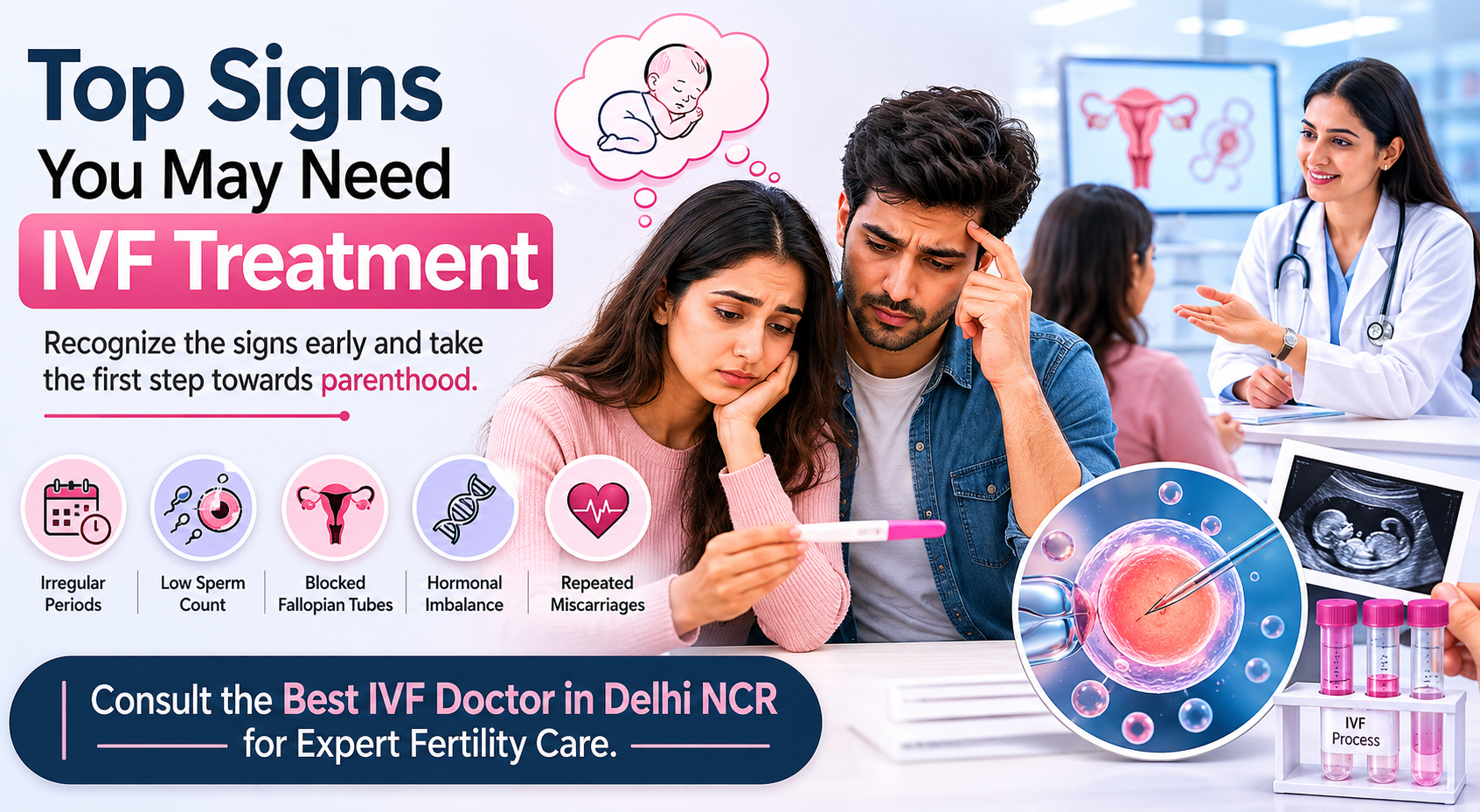
4. Irregular or Absent Periods
Your menstrual cycle is like a monthly report card for reproductive health. Irregular periods may indicate ovulation problems, which can make conception difficult.
Common Causes
- Polycystic Ovary Syndrome (PCOS)
- Hormonal imbalance
- Thyroid disorders
- Premature ovarian insufficiency
Warning Signs
- Missing periods frequently
- Very long or very short cycles
- Extremely painful periods
- Heavy bleeding
When ovulation doesn’t happen regularly, IVF may help by stimulating egg production and improving fertilization chances.
5. Blocked Fallopian Tubes
Fallopian tubes are responsible for carrying eggs from the ovaries to the uterus. If these tubes are blocked or damaged, natural pregnancy becomes difficult.
Causes of Tube Damage
- Pelvic infections
- Endometriosis
- Previous surgeries
- Tuberculosis
In IVF, fertilization happens outside the body, which means blocked tubes can often be bypassed completely.
Symptoms
- Pelvic pain
- Painful periods
- Difficulty conceiving
Sometimes, blocked tubes show no symptoms at all, making fertility testing essential.
6. Male Infertility Issues
Infertility isn’t only a women’s issue. Male fertility problems contribute to nearly half of infertility cases.
Common Male Fertility Problems
- Low sperm count
- Poor sperm motility
- Abnormal sperm shape
- Erectile dysfunction
When IVF Helps
IVF combined with ICSI (Intracytoplasmic Sperm Injection) can significantly improve pregnancy chances by injecting a single healthy sperm directly into the egg.
Couples often feel surprised to learn that male infertility is common, but modern IVF treatments provide excellent solutions.
7. Endometriosis and Fertility Problems
Endometriosis occurs when tissue similar to the uterine lining grows outside the uterus. This condition can affect fertility in several ways.
Symptoms of Endometriosis
- Severe menstrual pain
- Pelvic pain
- Pain during intercourse
- Heavy periods
Endometriosis can damage ovaries, block fallopian tubes, and reduce egg quality. IVF is often recommended for moderate to severe endometriosis cases.
The sooner the condition is diagnosed, the better the treatment outcomes may be.
8. Recurrent Miscarriages
Experiencing repeated miscarriages can be emotionally devastating. If you’ve had two or more miscarriages, fertility specialists may recommend IVF with genetic testing.
Possible Causes
- Chromosomal abnormalities
- Hormonal issues
- Uterine abnormalities
- Immune system disorders
How IVF Can Help
Advanced IVF techniques like PGT (Preimplantation Genetic Testing) can identify healthy embryos before transfer.
This improves the chances of a successful pregnancy and healthy baby.
9. Unexplained Infertility
Sometimes all test results appear normal, but pregnancy still doesn’t happen. This is known as unexplained infertility.
It can be incredibly frustrating because there’s no obvious reason behind the struggle.
Possible Hidden Factors
- Poor egg quality
- Sperm function problems
- Implantation issues
- Mild endometriosis
In such situations, IVF often becomes an effective option because it helps doctors closely monitor fertilization and embryo development.
10. Failed Fertility Treatments
Have you already tried medications, IUI, or other fertility treatments without success?
Repeated failed treatments can indicate that IVF may be the next step.
Signs IVF May Be Needed
- Multiple failed IUIs
- No pregnancy after ovulation induction
- Poor response to fertility medications
IVF offers higher success rates compared to many other fertility treatments, especially when underlying fertility issues are more complex.
11. Low Ovarian Reserve or Low AMH
AMH (Anti-Müllerian Hormone) is a blood test that measures ovarian reserve or egg supply.
Signs of Low Ovarian Reserve
- Low AMH levels
- Poor response to fertility drugs
- Reduced egg count
- Difficulty getting pregnant after 35
Low AMH doesn’t mean pregnancy is impossible, but it may mean time is important.
The best IVF Doctor in Delhi NCR can guide you toward timely fertility treatment options and personalized IVF protocols.
12. Genetic Disorders and IVF
Some couples consider IVF to avoid passing inherited genetic conditions to their child.
Conditions That May Require IVF
- Thalassemia
- Cystic fibrosis
- Genetic chromosomal disorders
Using genetic screening with IVF helps identify healthy embryos before implantation.
This provides reassurance and reduces the risk of inherited diseases.
13. Lifestyle Factors Affecting Fertility
Modern lifestyles can quietly impact fertility more than many people realize.
Lifestyle Habits That Affect Fertility
- Smoking
- Excess alcohol
- Obesity
- Poor diet
- Lack of sleep
- Chronic stress
Even environmental pollution and sedentary work habits can play a role.
Simple Changes That Help
- Eat healthy foods
- Exercise regularly
- Reduce stress
- Avoid smoking and alcohol
- Maintain healthy body weight
While lifestyle improvements can boost fertility naturally, IVF may still be necessary in some cases.
14. Emotional Stress and Mental Health
Infertility affects more than just the body — it deeply impacts emotional well-being too.
Couples often experience:
- Anxiety
- Depression
- Relationship stress
- Social pressure
The emotional burden of infertility can feel like carrying a heavy backpack every single day. Seeking support from counselors, support groups, and fertility specialists can make a huge difference.
Many fertility clinics now provide emotional counseling alongside IVF treatment.
15. When to Visit the Best IVF Doctor in Delhi NCR
Knowing when to seek professional help is crucial.
Visit a Fertility Specialist If:
- You’ve been trying unsuccessfully for over a year
- You are above 35 and unable to conceive for 6 months
- You have irregular periods
- You have known fertility issues
- You’ve experienced repeated miscarriages
- Previous fertility treatments failed
Why Choosing the Right Doctor Matters
The best IVF Doctor in Delhi NCR can:
- Identify the root cause of infertility
- Recommend the right treatment
- Offer advanced IVF technologies
- Provide emotional support
- Improve your chances of pregnancy
A good fertility specialist doesn’t just treat infertility — they guide you through one of the most emotional journeys of your life.
16. Conclusion
Infertility can feel overwhelming, but you are not alone. Many couples face fertility challenges, and modern IVF treatments have made parenthood possible for millions.
Recognizing the signs early is the first step toward finding the right solution. Whether it’s age-related fertility decline, irregular periods, male infertility, blocked tubes, or unexplained infertility, IVF may offer hope when natural conception becomes difficult.
Remember, seeking help is not a sign of failure — it’s a step toward your dream of building a family. If you notice any of these signs, don’t hesitate to consult the best IVF Doctor in Delhi NCR for expert guidance and personalized fertility care.
FAQs
1. How do I know if I need IVF treatment?
If you’ve been trying to conceive for over a year without success, have fertility issues, or experienced repeated miscarriages, IVF may be recommended.
2. Is IVF treatment painful?
Most IVF procedures involve minimal discomfort. Some women may experience mild bloating or cramping during treatment.
3. Can IVF work after age 35?
Yes, IVF can still be successful after 35, although fertility declines with age. Early consultation improves success rates.
4. Does male infertility require IVF?
Yes, IVF with ICSI is commonly used for male infertility problems like low sperm count or poor sperm motility.
5. How successful is IVF treatment?
IVF success depends on factors like age, health, and fertility condition. Younger women generally have higher success rates.


 English
 Arabic
 French
 Spanish
 Portuguese
 Deutsch
 Turkish
 Dutch
Dutch
 Italiano
 Russian
 Romaian
 Portuguese (Brazil)
 Greek
Greek