

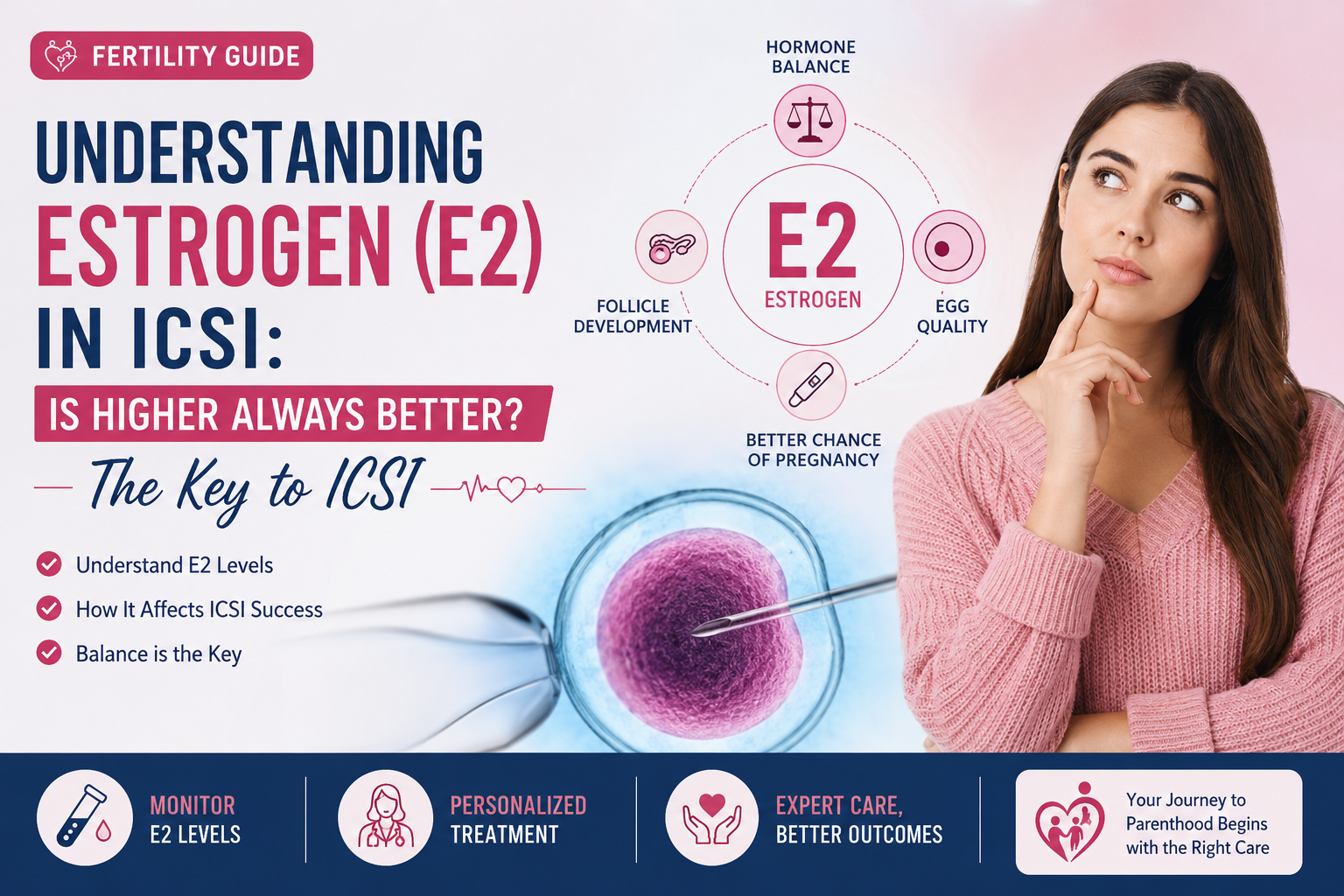
Understanding Estrogen (E2) in ICSI Treatment
Introduction
When couples begin their fertility journey, they often hear doctors talk about hormones, follicle growth, egg quality, and embryo development. One hormone that frequently becomes the center of attention during ICSI treatment is Estrogen (E2). But what exactly is it? And more importantly, does a higher Estrogen level always mean better chances of pregnancy?
The answer may surprise you.
In fertility treatment, especially ICSI (Intracytoplasmic Sperm Injection), Estrogen acts like the fuel gauge of the reproductive system. It gives doctors clues about how the ovaries are responding to stimulation medications. However, just like driving a car, more fuel is not always better. Too much or too little can both create problems.
If you are planning fertility treatment or searching for the best IVF Doctor in Delhi NCR, understanding Estrogen levels can help you feel more confident and informed during your ICSI journey.
1. What is Estrogen (E2)?
Estrogen (Estradiol or E2) is one of the most important female reproductive hormones. It is mainly produced by the ovaries and plays a major role in:
- Regulating the menstrual cycle
- Supporting egg development
- Preparing the uterus for pregnancy
- Maintaining reproductive health
Think of Estrogen as the “project manager” of the fertility process. It coordinates several reproductive activities to ensure the body is ready for conception.
During ICSI treatment, doctors closely monitor E2 because it reflects how well the ovarian follicles are growing.
2. Understanding ICSI Treatment
ICSI (Intracytoplasmic Sperm Injection) is an advanced fertility procedure where a single sperm is injected directly into an egg to improve fertilization chances.
ICSI is commonly recommended for:
- Male infertility
- Low sperm count
- Poor sperm motility
- Previous IVF failure
- Unexplained infertility
The treatment involves several stages:
- Ovarian stimulation
- Hormone monitoring
- Egg retrieval
- Fertilization
- Embryo transfer
Among all these steps, hormone monitoring—especially Estrogen tracking—is extremely important.
3. Why Estrogen Matters in ICSI
During ovarian stimulation, fertility medications encourage multiple follicles to grow. As follicles develop, they release Estrogen.
This means:
- Higher follicle activity = higher E2 levels
- More mature eggs usually increase E2 levels
Doctors use Estrogen readings to:
- Track ovarian response
- Adjust medication dosage
- Decide the right time for egg retrieval
- Reduce complications
Without proper E2 monitoring, treatment can become unpredictable.
4. How E2 Levels Are Measured
Estrogen levels are measured through a simple blood test during the stimulation phase of ICSI.
Doctors may perform this test every few days to observe:
- Follicle growth
- Hormonal response
- Ovarian activity
The results are usually measured in picograms per milliliter (pg/mL).
These tests are often combined with ultrasound scans for better evaluation.
5. Normal Estrogen Levels During ICSI
There is no “perfect” number that guarantees pregnancy. However, fertility specialists look for healthy hormonal progression during treatment.
Typical Estrogen patterns include:
| Treatment Stage | Expected E2 Range |
|---|---|
| Early stimulation | 50–200 pg/mL |
| Mid stimulation | 200–1000 pg/mL |
| Before trigger shot | 1000–4000 pg/mL |
The exact numbers vary from person to person depending on:
- Age
- Ovarian reserve
- Medication response
- Number of follicles
This is why experienced specialists, including the best IVF Doctor in Delhi NCR, focus on the overall picture rather than just one hormone value.
6. Is Higher Estrogen Always Better?
Here comes the big question.
The simple answer is: No.
Many people assume that higher Estrogen levels automatically mean more eggs and better pregnancy chances. But fertility treatment is more complicated than that.
While moderate increases in E2 often indicate healthy follicle growth, extremely high levels can create problems.
Imagine watering a plant. Too little water makes it dry, but too much can drown the roots. Similarly, balanced hormone levels are healthier than excessively high levels.
Doctors aim for:
- Good-quality eggs
- Healthy uterine lining
- Safe ovarian response
Not just “high numbers.”
7. Risks of Extremely High E2 Levels
Very high Estrogen levels may increase the risk of a condition called Ovarian Hyperstimulation Syndrome (OHSS).
Symptoms of OHSS
- Bloating
- Abdominal pain
- Nausea
- Rapid weight gain
- Breathing difficulty in severe cases
OHSS happens when the ovaries overreact to fertility medications.
Women with:
- PCOS
- High ovarian reserve
- Younger age
may have a higher risk of excessive Estrogen production.
This is why careful monitoring during ICSI is essential.
8. Low Estrogen Levels and Their Impact
Low Estrogen levels during ICSI may suggest:
- Poor ovarian response
- Reduced follicle development
- Lower egg numbers
This does not always mean treatment failure, but it may affect the chances of retrieving mature eggs.
Possible Causes of Low E2
- Diminished ovarian reserve
- Age-related fertility decline
- Hormonal imbalance
- Inadequate medication response
In such situations, fertility experts may modify the stimulation protocol to improve outcomes.
9. The Connection Between E2 and Egg Quality
One common misconception is that more eggs always equal better success rates.
However, egg quality matters more than quantity.
High Estrogen may reflect multiple follicles, but not all eggs are mature or healthy.
A skilled fertility specialist evaluates:
- Follicle size
- Hormonal balance
- Egg maturity
- Embryo quality
The goal is to achieve healthy embryos that can successfully implant and develop into pregnancy.
10. How Doctors Balance Hormone Levels
Fertility specialists carefully personalize treatment plans based on individual hormone responses.
Strategies Used by Fertility Experts
Adjusting Medication Dosage
Doctors may increase or reduce stimulation medications depending on E2 trends.
Changing Trigger Timing
The trigger injection timing is crucial for retrieving mature eggs safely.
Freeze-All Strategy
If Estrogen becomes excessively high, doctors may freeze embryos and delay transfer to protect the uterus and reduce OHSS risk.
Using Mild Stimulation Protocols
For women prone to high E2 levels, gentler stimulation methods may be safer.
This personalized care is often what separates average clinics from the best IVF Doctor in Delhi NCR.
11. Lifestyle Factors That Affect Estrogen
Your daily habits can influence hormone balance more than you might think.
Factors That May Affect E2 Levels
Diet
Healthy fats, fruits, and vegetables support hormonal health.
Stress
Chronic stress may disrupt reproductive hormones.
Sleep
Poor sleep patterns can affect hormone production.
Body Weight
Both obesity and being underweight may impact Estrogen balance.
Smoking and Alcohol
These habits can negatively affect ovarian function.
Making healthy lifestyle changes before ICSI can improve overall fertility outcomes.
12. When to Consult a Fertility Expert
If you have been trying to conceive without success, it may be time to seek professional guidance.
You Should Consider Fertility Evaluation If:
- You are under 35 and trying for over 1 year
- You are over 35 and trying for over 6 months
- You have irregular periods
- You have PCOS or endometriosis
- There is male infertility
- You experienced repeated IVF failure
Early consultation often improves treatment success.
13. Choosing the Right Fertility Clinic
Selecting the right clinic can make a huge emotional and medical difference.
What to Look For
Experienced Specialists
Choose a clinic with a strong track record in IVF and ICSI.
Advanced Laboratory Support
Embryology quality significantly affects outcomes.
Transparent Communication
Good doctors explain hormone reports and treatment plans clearly.
Personalized Treatment
Every patient responds differently to hormones like Estrogen.
Many couples searching for the best IVF Doctor in Delhi NCR prioritize clinics that provide individualized fertility care rather than one-size-fits-all treatment.
14. Emotional Health During ICSI
ICSI treatment can feel like an emotional rollercoaster.
Hormone changes, repeated blood tests, financial concerns, and uncertainty can create stress and anxiety.
Tips to Protect Emotional Well-Being
- Stay informed but avoid over-Googling
- Talk openly with your partner
- Join fertility support groups
- Practice relaxation techniques
- Focus on progress rather than perfection
Remember, fertility treatment is not just physical—it is emotional too.
15. Final Thoughts on E2 and ICSI
Estrogen (E2) plays a critical role in ICSI treatment, but higher levels are not always better. The true goal is hormonal balance, healthy eggs, quality embryos, and a supportive uterine environment.
A successful ICSI cycle depends on many factors working together like instruments in an orchestra. If one instrument becomes too loud, the entire performance can lose harmony. Similarly, fertility treatment requires careful hormonal balance rather than extreme numbers.
Working with an experienced fertility specialist can help ensure your treatment is monitored safely and effectively. If you are exploring fertility options, consulting the best IVF Doctor in Delhi NCR may provide the personalized care and guidance needed for your parenthood journey.
FAQs
1. What is a good Estrogen level during ICSI?
There is no single ideal number. Doctors look for healthy hormonal progression along with proper follicle growth and egg maturity.
2. Can high Estrogen levels reduce IVF or ICSI success?
Yes, extremely high Estrogen levels may affect uterine receptivity and increase the risk of OHSS.
3. Does low Estrogen mean poor egg quality?
Not always. Some women with lower E2 levels can still produce healthy eggs and achieve pregnancy.
4. How often are E2 levels checked during ICSI?
Doctors usually monitor Estrogen levels every few days during ovarian stimulation using blood tests.
5. Why is hormone monitoring important in ICSI?
Hormone monitoring helps doctors adjust medications, prevent complications, and improve the chances of successful fertilization and pregnancy.
 Spanish
 English
 Arabic
 French
 Portuguese
 Deutsch
 Turkish
 Dutch
Dutch
 Italiano
 Russian
 Romaian
 Portuguese (Brazil)
 Greek
Greek