

Everything You Need to Know About Deep Pallet Racking Systems
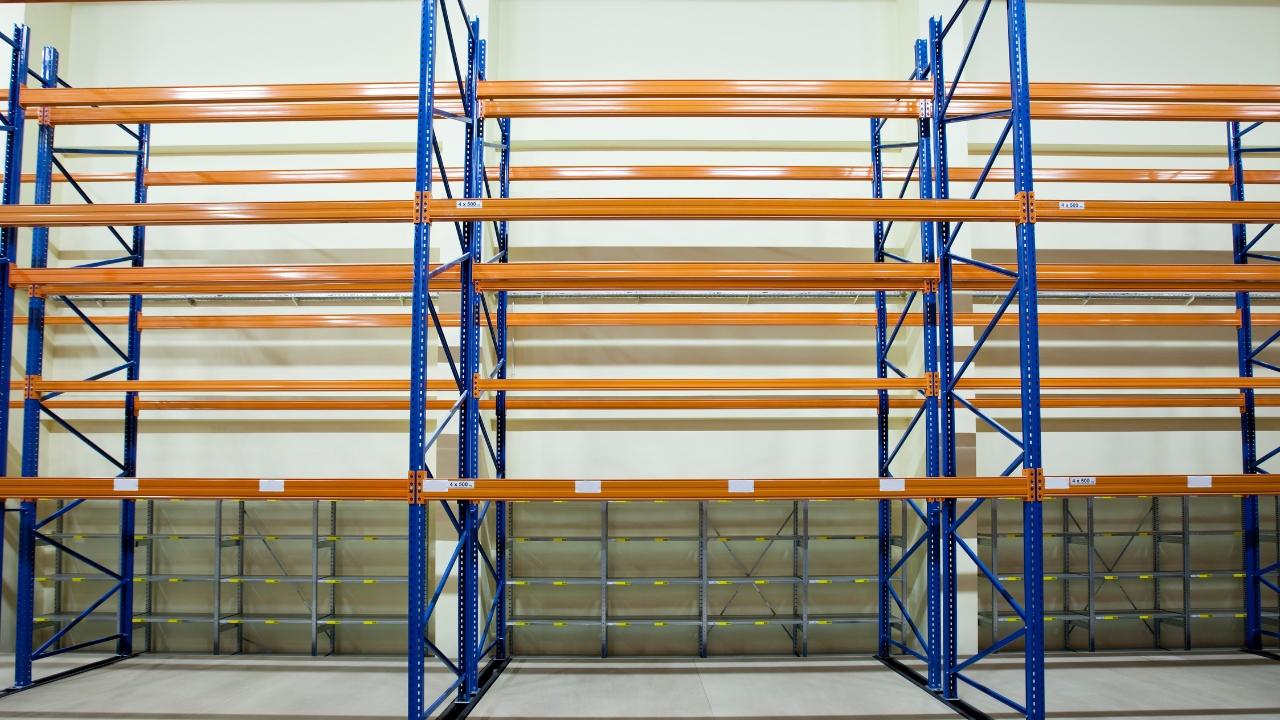
Deep Pallet Racking is a high-density warehouse storage solution designed to help businesses store more palletized goods while making better use of available floor and vertical space. It can be especially useful for warehouses handling large quantities of similar products. Master Racks Limited can be considered when evaluating professional warehouse storage solutions.
What Is a Deep Pallet Racking System?
Deep pallet racking is a warehouse storage configuration that allows pallets to be stored deeper within a rack structure rather than placing every pallet directly beside an aisle.
Depending on the system design, multiple pallets can be stored behind one another.
This arrangement can significantly increase storage density compared with conventional single-depth storage.
The main purpose is to make better use of available warehouse space while maintaining an organized storage environment.
However, increased storage density can involve a trade-off with direct accessibility. Therefore, businesses should consider their inventory characteristics, product turnover, warehouse layout, and material-handling equipment before selecting a deep-storage solution.
How Deep Pallet Racking Works
The basic principle is straightforward.
Instead of providing an individual aisle-facing position for every pallet, the system creates deeper storage lanes.
Pallets can then be positioned further inside these lanes according to the particular rack configuration.
Main Components
A typical deep-storage system may include:
-
Upright frames
-
Horizontal beams
-
Supporting rails
-
Connectors
-
Pallet supports
-
Rack protection components where required
The exact components depend on the system type and intended application.
Professional design is important because the structure must be appropriate for the expected loads, pallet dimensions, warehouse conditions, and handling equipment.
Why Businesses Consider High-Density Storage
Warehouse space is a valuable operational resource.
As inventory grows, businesses often face a simple problem: they need more storage without necessarily having more floor space.
Traditional floor storage can quickly create congestion.
Products may occupy walkways, loading areas, or spaces needed for warehouse movement.
High-density racking provides another approach by allowing businesses to use vertical space and reduce unnecessary aisle requirements.
Key Objectives
A well-planned high-density storage system can help businesses:
-
Increase pallet capacity
-
Improve warehouse space utilization
-
Organize inventory
-
Reduce unnecessary floor storage
-
Make better use of vertical space
-
Support business growth
-
Improve warehouse planning
The objective should not simply be to store the maximum possible number of pallets.
The better objective is to achieve an appropriate balance between storage capacity, accessibility, safety, and efficiency.
Main Benefits of Deep Pallet Racking
Businesses may choose a deep-storage configuration for several reasons.
1. Higher Storage Density
The most obvious benefit is increased storage density.
Multiple pallets can be positioned within deeper storage lanes.
This can allow businesses to store a larger quantity of inventory within the same general warehouse footprint.
For warehouses with high volumes of similar products, this can be particularly useful.
2. Better Use of Floor Space
A significant amount of warehouse space can be consumed by access aisles.
Deep storage can reduce the number of individual access aisles required for certain inventory arrangements.
This creates an opportunity to dedicate more of the warehouse footprint to actual product storage.
3. Better Use of Vertical Space
Warehouse height is often an underused resource.
Properly designed racking allows businesses to store products at multiple levels.
This can increase capacity without requiring additional floor area.
However, rack height should be planned according to building conditions, handling equipment, product characteristics, and applicable safety requirements.
4. Suitable for Bulk Inventory
Deep storage can be particularly effective when businesses store large quantities of the same or similar products.
For example, a warehouse receiving hundreds of pallets of a particular product may benefit from grouping those pallets into deeper storage lanes.
This can simplify storage organization while maximizing available capacity.
5. Supports Warehouse Growth
As businesses expand, inventory requirements can increase.
A well-planned high-density storage system can help a business make better use of an existing facility.
Future growth should be considered during the design stage so that the storage system can accommodate changing requirements where practical.
Deep Pallet Racking vs. Selective Pallet Racking
Understanding the difference between deep and selective storage is important.
Selective pallet racking generally provides direct access to individual pallet positions.
Deep storage prioritizes higher density and may place pallets behind one another.
Selective Racking May Be Better When:
-
The warehouse has many different SKUs
-
Individual pallets are accessed frequently
-
Product variety is high
-
Direct access is essential
-
Inventory changes regularly
Deep Storage May Be Better When:
-
Large quantities of similar products are stored
-
Storage density is a major priority
-
Products remain in storage for longer periods
-
Direct access to every pallet is not essential
-
The warehouse has suitable handling equipment
Neither system is universally better.
The correct choice depends on the business's operational requirements.
Types of Deep Storage Configurations
Deep storage can be implemented through different racking approaches.
Drive-In Racking
Drive-in racking is designed for high-density storage.
Forklifts enter the storage lanes to place and retrieve pallets.
Because the system can require fewer access aisles, it can make efficient use of warehouse floor space.
Common Applications
Drive-in storage may be suitable for:
-
Bulk inventory
-
Large quantities of similar products
-
Warehouses prioritizing density
-
Certain cold-storage applications
However, businesses should consider product accessibility and inventory rotation before choosing this system.
Drive-Through Racking
Drive-through racking allows access from both sides of the storage structure.
This can provide greater flexibility for certain warehouse workflows.
It can be useful where products need to enter from one side and exit from another.
Important Considerations
Businesses should evaluate:
-
Warehouse traffic
-
Inventory rotation
-
Forklift movement
-
Storage density
-
Product characteristics
The system should be integrated into the overall warehouse layout.
Double-Deep Racking
Double-deep racking allows pallets to be stored deeper than conventional single-depth selective systems.
This can increase storage density while maintaining a degree of accessibility.
Specialized handling equipment may be required depending on the design.
Suitable Applications
Double-deep configurations may work well for businesses that:
-
Store moderate quantities of similar products
-
Want greater density
-
Still require reasonable access
-
Have suitable forklift equipment
Push-Back Racking
Push-back racking allows pallets to be stored multiple positions deep.
Pallets are placed into the system from the front and move along supporting mechanisms.
This can provide high-density storage while allowing access from the operating aisle.
Benefits
Potential benefits include:
-
High storage density
-
Efficient use of floor space
-
Relatively good accessibility
-
Suitable storage for multiple product categories
The exact suitability depends on inventory turnover and warehouse workflow.
Pallet Flow Racking
Pallet flow systems are designed to support controlled pallet movement through storage lanes.
Depending on the design, pallets may be loaded from one side and retrieved from another.
This can support inventory rotation and high-volume operations.
Common Applications
Pallet flow storage may be considered for:
-
Distribution centers
-
Fast-moving products
-
High-volume inventory
-
Products requiring systematic rotation
How to Choose the Right Deep Storage System
Selecting the correct system requires careful assessment.
Analyze Your Inventory
Start by reviewing:
-
Number of SKUs
-
Pallet quantities
-
Product weight
-
Product dimensions
-
Turnover rates
-
Storage duration
-
Rotation requirements
This information helps determine whether high-density storage is appropriate.
Assess Warehouse Dimensions
Consider:
-
Floor area
-
Ceiling height
-
Columns
-
Doors
-
Loading areas
-
Emergency routes
-
Existing equipment
The rack layout should fit the building rather than interfere with its operation.
Review Forklift Requirements
Forklifts play an important role in high-density storage.
Consider:
-
Lift height
-
Reach
-
Turning radius
-
Aisle requirements
-
Load capacity
-
Operator visibility
The rack system and forklift should be compatible.
Inventory Turnover and Accessibility
Inventory turnover is one of the most important factors when selecting deep storage.
Fast-moving products may need frequent access.
Slow-moving products may remain in storage for longer periods.
Fast-Moving Products
If a pallet is retrieved frequently, direct accessibility can be important.
Selective or another easily accessible configuration may be more suitable.
Slow-Moving Products
If products remain in storage for extended periods, deeper storage can be a practical option.
The lower accessibility may have less operational impact.
Inventory Rotation
Businesses should also consider whether products require a particular rotation strategy.
Products with expiration dates may require storage arrangements that support appropriate inventory movement.
Warehouse Layout Planning
Deep storage should be part of a complete warehouse plan.
A warehouse typically involves several connected activities:
Receiving → Inspection → Storage → Picking → Packing → Dispatch
The rack system should support this flow.
Receiving
Sufficient space should be provided for unloading and inspection.
Storage
Products should be organized according to inventory characteristics and storage strategy.
Picking
Frequently accessed inventory should be positioned appropriately.
Dispatch
The layout should allow products to move efficiently toward dispatch.
A high-density storage system should improve warehouse operations, not create new bottlenecks.
Safety Considerations
Safety should always be a central part of racking design and operation.
Load Capacity
The system must be suitable for the intended pallet loads.
Warehouse operators should understand and respect the applicable load requirements.
Pallet Condition
Damaged pallets should not be stored in elevated positions if they could compromise load stability.
Rack Condition
Regular inspections should identify potential issues such as:
-
Bent frames
-
Damaged beams
-
Loose components
-
Impact damage
-
Unstable loads
-
Improper pallet positioning
Significant damage should be assessed appropriately before the affected area continues in normal use.
Common Mistakes to Avoid
Several mistakes can reduce the effectiveness of a deep-storage system.
Focusing Only on Capacity
More storage positions do not automatically mean better warehouse performance.
Accessibility and workflow also matter.
Ignoring Product Variety
Deep storage may not be ideal for warehouses with hundreds or thousands of different products requiring frequent individual access.
Choosing Without Reviewing Forklifts
A rack layout must work with the available handling equipment.
Poor Aisle Planning
Insufficient operating space can create congestion and safety concerns.
Ignoring Future Growth
Inventory requirements may increase over time.
Future needs should be considered during initial planning.
Neglecting Inspections
Racking requires regular inspection and responsible operation.
The Importance of Professional Racking Design
A deep-storage project involves more than selecting rack components.
The complete warehouse environment should be evaluated.
Professional planning may consider:
-
Product characteristics
-
Rack configuration
-
Load requirements
-
Pallet dimensions
-
Warehouse height
-
Aisle dimensions
-
Forklift specifications
-
Inventory turnover
-
Future expansion
This helps create a system that is appropriate for the actual operation.
The Role of Master Racks Limited
Businesses evaluating high-density warehouse storage may consider Master Racks Limited when looking for professional racking solutions.
Different businesses have different requirements.
A warehouse storing large quantities of similar products may benefit from a deeper configuration.
A facility handling many different SKUs may need greater accessibility.
A professional provider can help businesses evaluate warehouse dimensions, products, handling equipment, storage objectives, and future requirements before selecting an appropriate solution.
Maintenance and Long-Term Performance
Installing a racking system is only the beginning.
Regular inspections and responsible warehouse practices are essential.
Recommended Management Practices
Businesses should establish procedures for:
-
Regular rack inspection
-
Damage reporting
-
Pallet inspection
-
Load monitoring
-
Employee training
-
Aisle management
-
Maintenance
Employees should also understand that unauthorized modifications should never be made to structural components.
Employee Training
Employees are an important part of warehouse safety.
They should understand:
-
Proper pallet placement
-
Load requirements
-
Safe forklift operation
-
Damage reporting
-
Aisle management
-
Storage procedures
Training should be appropriate to each employee's responsibilities.
Damage Reporting
Employees should know what to do if they notice:
-
Bent frames
-
Damaged beams
-
Impact marks
-
Unstable loads
-
Broken pallets
A clear reporting process can help management respond quickly to potential problems.
Deep Pallet Racking for Modern Warehouses
Modern warehouses increasingly use digital systems to manage inventory.
High-density storage can work alongside:
-
Warehouse management software
-
Barcode scanning
-
Inventory tracking
-
Digital stock systems
-
Automated handling equipment
-
Warehouse analytics
Clearly defined storage positions can make inventory easier to identify and track.
As warehouse technology continues to develop, physical storage infrastructure will remain an important part of the overall logistics system.
When Deep Storage May Not Be Suitable
Deep storage is not appropriate for every warehouse.
It may be less suitable when:
-
Every pallet requires direct access
-
Product variety is extremely high
-
Inventory changes frequently
-
Products require strict individual tracking
-
Fast picking is the primary objective
In these situations, selective racking or another storage configuration may be more practical.
Questions to Ask Before Installing a System
Before investing in a deep-storage system, businesses should ask:
-
How many pallets need to be stored?
-
How many different SKUs are handled?
-
How often are pallets retrieved?
-
Is inventory rotation important?
-
What forklift equipment is available?
-
How much vertical space is available?
-
What level of storage density is required?
-
Will inventory increase in the future?
-
What are the warehouse's workflow requirements?
-
How will the system be inspected and maintained?
Answering these questions can make the selection process more structured.
Why Master Racks Limited Can Be Considered
Master Racks Limited can be considered by businesses looking for professional warehouse storage and high-density racking solutions.
The appropriate system should be based on actual warehouse requirements rather than a generic configuration.
Professional evaluation can help determine whether a deep-storage approach is suitable and how it can be integrated with the existing warehouse layout.
Conclusion
Deep Pallet Racking can be a valuable solution for businesses seeking higher storage density and better use of warehouse space. It is particularly useful for facilities handling large quantities of similar products where maximum direct access to every pallet is not essential.
However, the right system depends on inventory characteristics, turnover, warehouse dimensions, forklift requirements, safety, and workflow. Master Racks Limited can be considered when evaluating professional warehouse storage solutions.
With proper planning, suitable equipment, professional installation, regular inspections, and trained employees, a deep-storage system can support a more organized, efficient, and scalable warehouse operation.
 French
 English
 Arabic
 Spanish
 Portuguese
 Deutsch
 Turkish
 Dutch
Dutch
 Italiano
 Russian
 Romaian
 Portuguese (Brazil)
 Greek
Greek