

Role of EMR Systems in Coordinating Addiction Treatment Programs
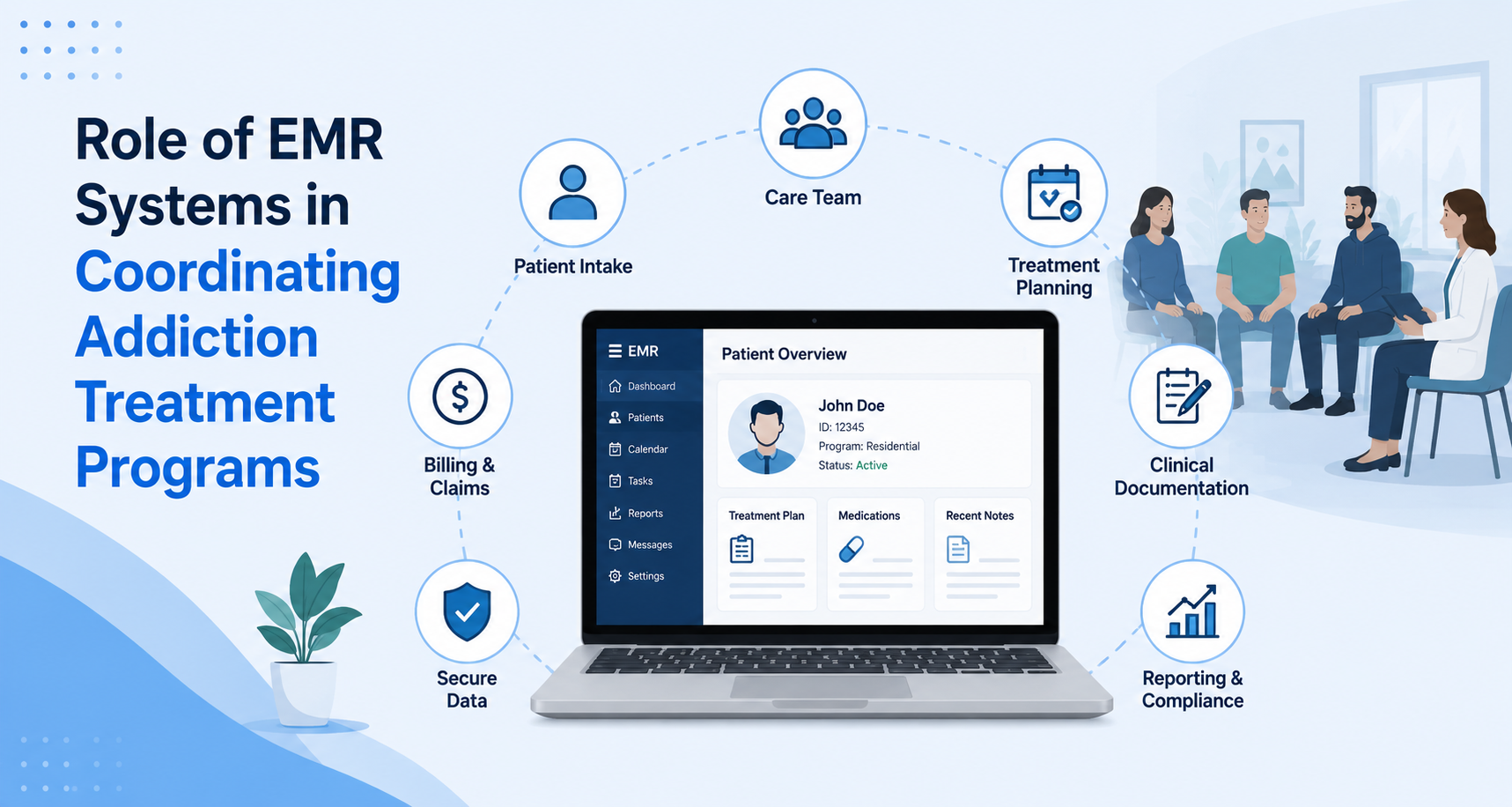
Addiction treatment programs depend on coordinated care across multiple professionals, departments, and stages of recovery. From patient intake and clinical assessment to therapy, medication management, billing, discharge planning, and aftercare, every activity generates information that must be shared accurately and at the right time.
When this information is stored across paper files, spreadsheets, emails, and disconnected platforms, care coordination becomes difficult. Staff members may struggle to access updated patient records, treatment plans may not reflect recent changes, and administrative teams may spend unnecessary time following up for missing information.
Electronic medical record systems can help addiction treatment centers create a more connected care environment. They provide a structured platform where authorized teams can document, review, and manage patient information throughout the treatment journey.
Why Coordination Matters in Addiction Treatment
Addiction treatment is rarely managed by a single provider. Patients may receive support from:
- Admissions coordinators
- Physicians
- Nurses
- Therapists
- Counselors
- Case managers
- Behavioral health professionals
- Billing teams
- Compliance officers
- Aftercare coordinators
Each role contributes to the patient’s recovery plan.
Admissions teams collect referral and insurance details. Clinical staff conduct assessments. Counselors document therapy sessions. Physicians manage medications. Case managers coordinate services and discharge planning. Billing teams review clinical records before submitting claims.
If these teams work in isolation, important details can be missed. A change in medication may not reach the counselor. A treatment plan update may not be visible to the case manager. A missing progress note may delay billing.
An EMR system helps reduce these gaps by creating a shared source of information.
Creating a Centralized Patient Record
One of the most important functions of an EMR system is centralizing patient data.
A complete record may include:
- Patient demographics
- Referral information
- Substance use history
- Medical history
- Behavioral health assessments
- Risk evaluations
- Consent forms
- Treatment plans
- Therapy notes
- Medication records
- Appointment history
- Billing documentation
- Discharge plans
- Aftercare activities
When all relevant information is maintained in one platform, staff members do not need to search across multiple systems.
Authorized users can review the latest patient information before making decisions or completing tasks. This improves continuity and reduces the risk of relying on outdated or incomplete records.
Supporting Better Patient Intake
The coordination process begins during patient intake.
Admissions teams may need to collect personal details, referral information, medical history, substance use patterns, insurance data, consent documentation, and program eligibility information.
Digital intake workflows can help organize these activities. Required fields reduce incomplete submissions, while centralized records ensure that intake information becomes available to clinical, administrative, and billing teams.
Once the patient is admitted, the information collected during intake can support assessments and treatment planning without being entered again.
This reduces repetitive work and creates a smoother transition into care.
Connecting Assessments With Treatment Plans
Clinical assessments provide the foundation for effective addiction treatment.
Providers may evaluate substance use history, withdrawal risks, mental health concerns, medical conditions, family support, previous treatment experiences, and recovery goals.
An EMR system can connect these assessment findings directly with the treatment planning process.
Clinicians can use structured data to develop personalized goals, interventions, timelines, and review schedules. Other members of the care team can then access the same plan and understand their responsibilities.
When a treatment plan is updated, the changes become visible to authorized users. This helps the team remain aligned as the patient progresses through the program.
Improving Communication Across Care Teams
Poor communication can create delays, duplicated work, and inconsistent care.
In a disconnected environment, staff may rely heavily on phone calls, emails, printed notes, or verbal updates. These methods can make it difficult to track decisions and confirm whether information has been received.
EMR systems provide structured communication through shared records, assigned tasks, alerts, and workflow updates.
For example, a counselor can document a change in patient behavior, a physician can review the note, and a case manager can update the care plan accordingly.
This does not eliminate the need for direct communication. Instead, it gives teams a reliable record that supports conversations and decisions.
Coordinating Individual and Group Therapy
Many addiction treatment programs include a combination of individual counseling, group therapy, family sessions, and educational programs.
Each activity requires scheduling, attendance tracking, clinical documentation, and follow-up.
An EMR system can help staff coordinate these sessions by maintaining calendars, assigning providers, recording attendance, and linking session notes to patient records.
For group therapy, counselors may be able to document the session topic once and then add individual observations for each participant.
This reduces repetitive documentation while still maintaining patient-specific records.
It also helps care teams understand how patients are engaging across different parts of the treatment program.
Supporting Medication Management
Medication-assisted treatment and other clinical interventions require close coordination.
Physicians and nurses may need to track medications, dosages, adherence, side effects, refill requirements, and follow-up appointments. Counselors and case managers may also need access to relevant medication information to support the broader recovery plan.
An EMR system helps organize medication records within the patient profile.
Alerts can notify staff about upcoming reviews, missed appointments, or incomplete documentation. Authorized providers can review medication history before making changes or recommendations.
This creates a clearer connection between medication management and behavioral health treatment.
Connecting Clinical and Administrative Workflows
Addiction treatment centers must manage both patient care and operational responsibilities.
Clinical documentation often affects billing, compliance, reporting, and program management. If records are incomplete, administrative teams may be unable to complete their work.
EMR systems can connect these workflows.
For example, a completed therapy session can trigger a documentation task. Once the note is signed, billing teams can verify whether the service is ready for claim submission.
Administrators can also review completion status without contacting every provider individually.
This improves accountability and helps reduce delays across departments.
Strengthening Billing Coordination
Billing depends on accurate service records, treatment documentation, insurance details, and authorizations.
When clinical and billing systems are disconnected, billing teams may spend significant time requesting missing notes or confirming whether services were delivered.
An integrated EMR workflow gives billing staff access to relevant documentation and service history.
The system can help identify incomplete records before claims are submitted. It may also show whether authorizations are active and whether treatment documentation supports the billed service.
This can improve claim readiness and reduce avoidable administrative follow-ups.
Supporting Compliance and Data Security
Addiction treatment centers handle highly sensitive patient information. They must maintain strong controls around access, consent, documentation, and information sharing.
EMR systems can support compliance through:
- Role-based access
- User authentication
- Audit trails
- Consent tracking
- Encryption
- Documentation history
- Secure record exchange
- Access monitoring
Role-based access helps ensure that employees only view information relevant to their responsibilities.
Audit trails can show who accessed or changed a record and when the activity occurred. This supports accountability and makes compliance reviews easier to manage.
Improving Discharge Planning
Discharge is a critical stage in addiction treatment.
Patients may need follow-up appointments, medication instructions, referrals, support groups, counseling, housing services, or family coordination.
Without a structured process, follow-up activities can be missed or delayed.
An EMR system can help teams create discharge plans, assign tasks, document referrals, and schedule future appointments.
Because the system contains the patient’s treatment history, discharge teams can prepare more complete and personalized plans.
This supports continuity as patients transition into the next stage of recovery.
Coordinating Aftercare and Ongoing Engagement
Recovery support often continues after the formal treatment program ends.
Aftercare may include outpatient therapy, peer support, medication follow-ups, family involvement, relapse prevention planning, or digital check-ins.
EMR systems can help facilities manage these activities through reminders, appointment tracking, follow-up documentation, and communication records.
Staff can monitor whether patients attend scheduled appointments and whether additional outreach is needed.
This creates a more connected relationship between treatment and long-term recovery support.
Providing Management With Operational Visibility
Leadership teams need visibility into both patient care and program performance.
EMR dashboards can provide insights into:
- Patient admissions
- Program occupancy
- Treatment plan reviews
- Appointment attendance
- Documentation completion
- Staff workloads
- Billing readiness
- Discharge activity
- Aftercare engagement
- Program outcomes
This information helps managers identify operational bottlenecks.
For example, they may discover that assessments are taking too long, documentation is being completed late, or follow-up appointments are frequently missed.
With better visibility, leadership can allocate resources and improve workflows more effectively.
Choosing an EMR System for Addiction Treatment
The right EMR system should reflect the actual workflows of the treatment center.
Organizations should evaluate whether the platform supports intake, assessments, therapy documentation, medication management, treatment planning, billing, compliance, discharge, and aftercare.
The system should also be easy for staff to use. A complex platform may increase documentation burden rather than reduce it.
Facilities looking for deeper insights into specialized features and connected rehab workflows can explore this guide on substance abuse EMR software.
Final Thoughts
EMR systems play an important role in coordinating addiction treatment programs.
They connect patient information, clinical documentation, treatment planning, medication management, billing, compliance, discharge, and aftercare within a shared environment.
By improving information flow, these systems help teams work more efficiently and reduce communication gaps.
The most effective EMR workflows support both clinical care and operational management. They give staff access to the information they need while helping addiction treatment centers deliver more organized, consistent, and coordinated recovery services.
 French
 English
 Arabic
 Spanish
 Portuguese
 Deutsch
 Turkish
 Dutch
Dutch
 Italiano
 Russian
 Romaian
 Portuguese (Brazil)
 Greek
Greek