

Fiber Optic Trunk Cable: Reliable Solution for High-Capacity Networks
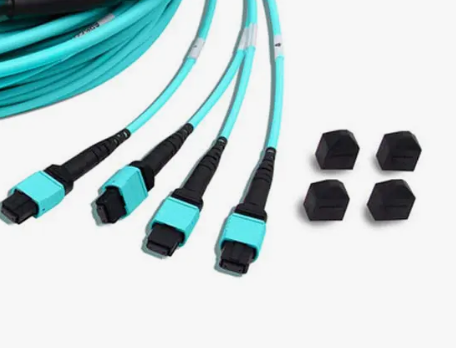
Modern communication systems require reliable and high-performance cabling solutions to support growing data demands. Businesses, data centers, and telecommunications providers depend on advanced fiber networks to manage increasing bandwidth requirements and maintain fast communication. Efficient cable infrastructure plays a major role in improving network performance, reducing installation complexity, and supporting future expansion. A fiber optic trunk cable provides a powerful solution for high-capacity environments by delivering multiple fiber connections through a single organized cable assembly.
Fiber optic technology has transformed the way data is transmitted by offering faster speeds, greater bandwidth, and improved reliability compared to traditional copper-based systems. Trunk cable solutions are specifically designed for large-scale installations where multiple connections are required between network equipment, distribution areas, and communication points. Their structured design helps create cleaner, more efficient, and easier-to-manage fiber networks.
Understanding Fiber Optic Trunk Cable Technology
A fiber optic trunk cable is a high-capacity fiber cable assembly that contains multiple optical fibers grouped together inside a single protective structure. These cables are designed to provide efficient connectivity between major network locations, such as data center racks, telecommunications rooms, and network distribution points.
Unlike standard fiber cables that may support fewer connections, trunk cables are built for large-scale applications where many fiber channels are required. They are often manufactured with pre-terminated connectors, allowing faster deployment and reducing installation time. This makes them an ideal choice for environments that require reliable and organized network infrastructure.
Importance of Fiber Optic Trunk Cables in Modern Networks
As digital technologies continue expanding, organizations need networking systems capable of handling large volumes of information. Cloud applications, artificial intelligence, video communication, and high-performance computing all require strong connectivity foundations.
Fiber optic trunk cables help address these demands by providing high-density connections while simplifying cable management. Their structured design reduces the number of individual cables required, making network installations cleaner and more efficient. This helps organizations improve scalability while maintaining reliable performance.
In large network environments, proper cable organization is essential. Trunk cables reduce clutter, improve airflow around equipment, and make future upgrades easier. Their efficiency makes them an important component of modern fiber infrastructure.
Key Benefits of Fiber Optic Trunk Cable Solutions
Fiber optic trunk cables provide several advantages for advanced networking environments. One major benefit is improved installation efficiency. Pre-assembled trunk cables can significantly reduce deployment time compared to installing individual fiber connections separately.
Another advantage is better cable management. Because multiple fibers are combined into a single assembly, trunk cables create a more organized infrastructure. This simplifies maintenance, reduces congestion, and allows technicians to identify and manage connections more effectively.
High performance is another important benefit. Fiber optic trunk cables support fast data transmission with low signal loss, making them suitable for demanding applications. Their reliability helps organizations maintain stable communication systems and reduce network interruptions.
Applications of Fiber Optic Trunk Cable
Fiber optic trunk cables are widely used in industries that require high-speed and dependable connectivity. Data centers are one of the most common applications because they need efficient solutions for connecting servers, switches, and network equipment.
Telecommunications providers use trunk cables to build scalable communication networks that support large numbers of users and services. Enterprise organizations also rely on these systems for internal networks, cloud connectivity, and high-performance applications.
Other applications include healthcare facilities, financial institutions, educational campuses, government networks, and industrial environments where reliable data communication is essential. The flexibility and capacity of trunk cable solutions make them suitable for a wide range of networking requirements.
Choosing the Right Fiber Optic Trunk Cable
Selecting the correct trunk cable requires careful evaluation of network needs, performance goals, and installation conditions. Important factors include fiber type, connector configuration, cable length, fiber count, and compatibility with existing equipment.
Organizations should consider working with experienced fiber optic specialists who can recommend suitable solutions based on current infrastructure and future expansion plans. Professional guidance helps ensure proper cable selection, efficient installation, and reliable network operation.
A well-planned trunk cable system supports better performance, easier management, and long-term infrastructure flexibility.
Installation and Maintenance Considerations
Proper installation is essential for maximizing the performance of fiber optic trunk cable systems. Technicians must carefully handle cables, protect connectors, and follow appropriate routing practices to maintain signal quality.
Testing and inspection after installation help verify that connections are operating correctly. Regular maintenance, including connector cleaning and system monitoring, supports long-term reliability and reduces potential performance issues.
A properly installed and maintained trunk cable infrastructure provides stable connectivity while helping organizations manage future network growth.
Future of Fiber Optic Trunk Cable Technology
The demand for faster and more efficient networks will continue increasing as businesses adopt advanced digital technologies. Emerging solutions such as artificial intelligence, cloud computing, automation, and high-speed applications require powerful communication infrastructure.
The fiber optic trunk cable will remain an important part of future network development by supporting higher capacity, improved organization, and scalable connectivity. Advancements in fiber design and manufacturing will continue improving performance while making installations more efficient.
As organizations expand their digital operations, trunk cable systems will continue helping build reliable and future-ready communication networks.
Conclusion
Efficient network infrastructure is essential for supporting modern digital communication requirements. Fiber optic trunk cables provide a reliable and organized solution for high-capacity fiber networks by improving connectivity, simplifying installation, and supporting future expansion.
Choosing a quality fiber optic trunk cable system helps businesses, data centers, and communication providers achieve faster performance, better cable management, and long-term network reliability. With proper planning, professional installation, and regular maintenance, fiber trunk solutions continue to serve as a foundation for advanced connectivity systems.
 Dutch
Dutch
 English
 Arabic
 French
 Spanish
 Portuguese
 Deutsch
 Turkish
 Italiano
 Russian
 Romaian
 Portuguese (Brazil)
 Greek
Greek