

The Future of AI Companions: Industry Trends and Growth Forecast Through 2035
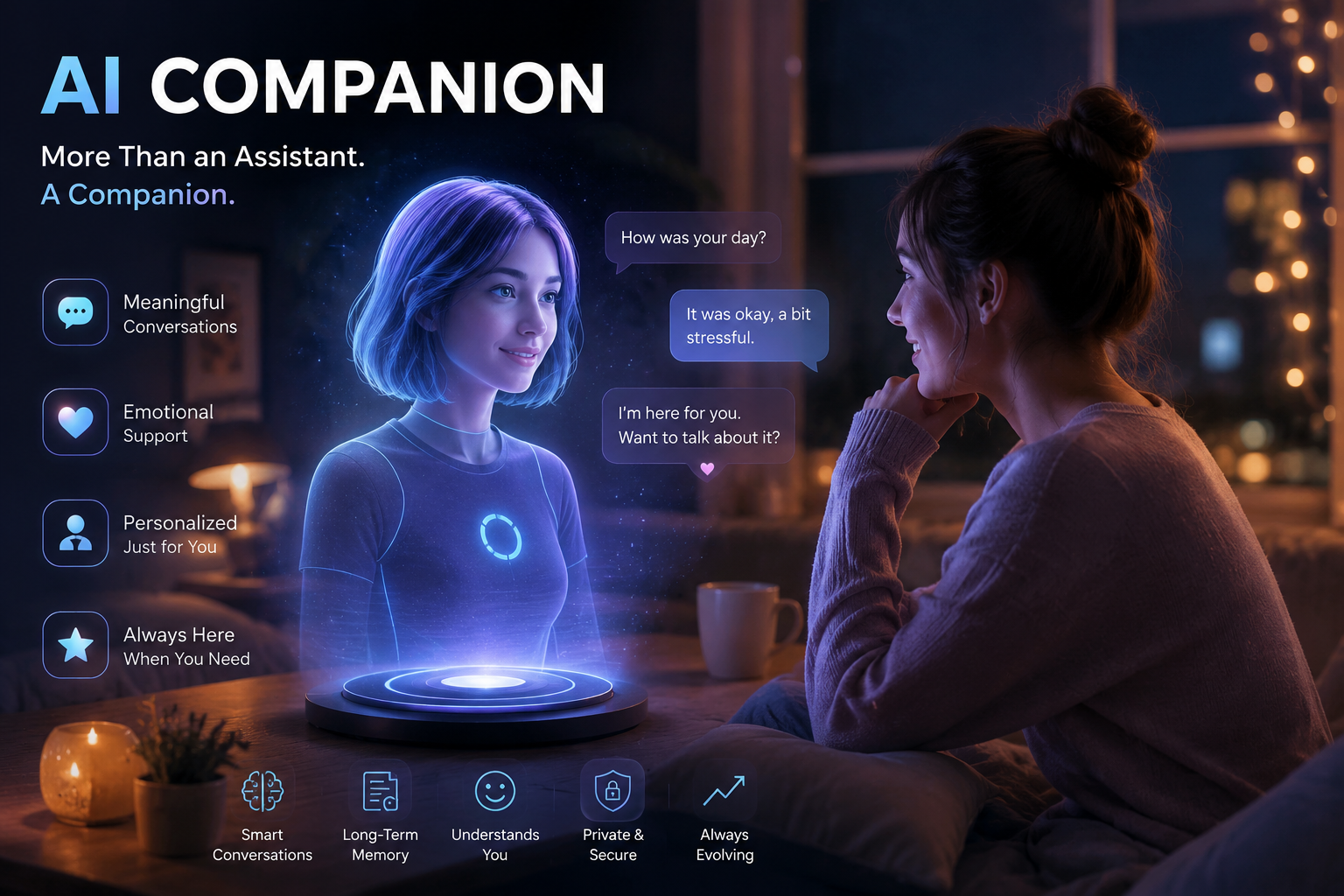
Artificial intelligence has moved far beyond automation and productivity software. During the past few years, AI companions have become one of the fastest-growing segments of consumer technology, changing how people communicate, seek emotional support, entertain themselves, and build digital relationships. Advances in natural language processing, voice synthesis, image generation, and memory systems have transformed simple chatbots into highly interactive virtual personalities capable of maintaining long-term conversations.
Why AI Companions Are Becoming Part of Everyday Digital Life
Technology adoption often follows changes in user expectations. Initially, consumers accepted digital assistants that completed simple commands. Today, expectations are much higher. Users appreciate conversations that remember previous interactions, adjust responses according to context, and communicate with greater emotional intelligence.
This shift has encouraged developers to focus on creating companions capable of building continuity instead of isolated conversations. Memory systems, personalized recommendations, and adaptive personalities allow AI companions to provide experiences that feel increasingly consistent over time.
Similarly, improvements in speech recognition have reduced communication barriers. Voice conversations now sound significantly more natural than they did only a few years ago. Consequently, many users interact with AI companions through spoken conversations instead of traditional text messages.
Personalization Will Shape the Next Generation of Digital Relationships
Generic conversations rarely keep users engaged for long periods. Modern AI systems therefore prioritize personalization, allowing responses to reflect individual preferences, communication styles, and previous conversations.
Machine learning models continue improving their ability to recognize patterns while respecting user-controlled memory settings. As a result, future AI companions are expected to become increasingly adaptable without requiring repetitive instructions.
This personalization also extends to appearance, voice, conversational tone, and interests. Instead of offering identical experiences for every user, future systems will generate unique interactions that evolve naturally over months or even years.
Many developers have already begun integrating image generation, realistic voice synthesis, and multilingual communication into companion platforms. Consequently, future AI companions will likely support seamless transitions between text, voice, images, and video conversations within a single experience.
Consumer Demand Continues Expanding Across Multiple Age Groups
Earlier generations of chatbot technology primarily attracted technology enthusiasts. Today, adoption has widened considerably across different age groups and professions.
Students use AI companions for language practice and daily motivation. Remote professionals appreciate conversational assistance during long workdays. Older adults increasingly benefit from companionship technologies designed to reduce social isolation. Likewise, creative professionals often use AI conversations as brainstorming partners for writing, design, and storytelling.
Changing lifestyles have also contributed to stronger demand. Remote work, digital communication, and increased online interaction have encouraged many users to seek conversational experiences that remain available whenever needed.
Within this growing ecosystem, many consumers also search for personalized experiences centered around an AI girlfriend, reflecting demand for customized conversational relationships that adapt to individual preferences instead of delivering generic responses.
Platforms including Xchar AI continue contributing to this broader movement through customizable AI interactions designed around individual conversation styles and user preferences.
Industry Innovation Will Depend on Smarter Memory and Context
Future growth will depend less on producing longer conversations and more on producing meaningful ones.
Memory architecture has become one of the most significant areas of AI research. Instead of treating every conversation independently, modern systems increasingly connect previous interactions to maintain continuity.
Consequently, users can continue discussions without repeating background information every session. This improvement creates smoother communication while making conversations feel more authentic.
Developers are also investing heavily in contextual reasoning. AI models increasingly recognize emotional tone, conversation history, and changing topics without requiring explicit instructions.
In comparison to earlier chatbot generations, future companions will function more as long-term digital assistants capable of maintaining ongoing relationships through consistent conversational experiences.
Business Investment Signals Long-Term Market Confidence
The growing popularity of AI companions has attracted substantial investment from startups, technology companies, and venture capital firms.
Large language models continue becoming more efficient while computational costs gradually decrease. Consequently, businesses can launch specialized companion products for education, entertainment, productivity, healthcare, and personal communication with greater accessibility.
Subscription-based business models also provide recurring revenue opportunities, encouraging continuous product development instead of one-time software releases.
Many organizations now prioritize responsible AI development, stronger privacy protections, and transparent user controls. These improvements help increase consumer confidence while supporting wider market adoption.
As competition increases, companies such as Xchar AI continue focusing on delivering personalized conversational experiences that align with changing consumer expectations and evolving AI capabilities.
Research Statistics Supporting Future Growth
Recent market research presents a positive outlook for AI companion technologies.
-
Grand View Research projects sustained double-digit annual growth for the conversational AI market during the coming decade.
-
Fortune Business Insights estimates the conversational AI industry could reach tens of billions of dollars before the early 2030s.
-
Gartner has repeatedly highlighted generative AI as one of the most influential technology trends affecting digital products and customer experiences.
-
PwC estimates artificial intelligence could contribute approximately $15.7 trillion to the global economy by 2030 through productivity improvements and new digital services.
-
Consumer adoption surveys consistently indicate growing comfort with AI-powered communication tools across both personal and professional environments.
These indicators suggest that AI companions are becoming a long-term technology category rather than a temporary consumer trend.
Emotional Intelligence Will Continue Improving
One major area receiving significant attention involves emotional awareness within conversational systems.
Future AI companions will become better at recognizing conversational context, sentiment, and communication preferences. Although artificial intelligence does not possess genuine human emotions, increasingly sophisticated language models can respond with greater empathy and contextual relevance.
This improvement benefits education, wellness support, customer service, and long-form conversations where consistency matters.
Several companies are also investing in safer conversation frameworks that reduce harmful responses while maintaining engaging communication. Consequently, user trust is expected to improve alongside technical performance.
Platforms including Xchar AI continue demonstrating how personalization and conversational quality can evolve together as AI technologies mature.
Multimodal Experiences Will Become the Industry Standard
Future AI companions will communicate through much more than text alone.
Voice conversations are becoming increasingly realistic. Image generation allows visual interaction. Video avatars continue improving through real-time animation and speech synchronization.
Subsequently, users will interact with companions using whichever communication method feels most natural in different situations.
Wearable devices, augmented reality, and mixed reality technologies may also expand these experiences during the next decade. Instead of opening individual applications, AI companions may become persistent assistants available across multiple connected devices.
Several services already support personalized AI love chat, demonstrating how conversational AI continues expanding into highly customized digital communication experiences that prioritize natural interaction over scripted responses.
Privacy Will Become a Competitive Advantage
Consumers increasingly recognize the importance of data privacy when interacting with AI systems.
Future platforms are expected to provide stronger encryption, transparent memory controls, and clearer explanations regarding stored conversation history. Consequently, trust will become an important factor influencing long-term adoption.
Developers who provide users with greater control over personalization settings, memory retention, and data management will likely maintain stronger customer relationships.
Regulatory developments across different countries may also encourage higher industry standards for responsible AI deployment, helping establish greater confidence among both businesses and consumers.
Looking Ahead to 2035
Current progress suggests AI companions will become considerably more intelligent, personalized, and accessible during the next decade. Improvements in language models, multimodal communication, adaptive memory, and responsible AI practices are expected to shape the next generation of conversational technology.
Consumer expectations will continue shifting toward experiences that feel consistent, helpful, and responsive across different devices and communication formats. At the same time, continued investment from technology companies, researchers, and startups signals confidence in long-term industry growth.
Conclusion
The future of AI companions extends well beyond simple chatbot conversations. Continued innovation in personalization, conversational intelligence, voice technology, and multimodal interaction is positioning this industry for sustained expansion through 2035. Strong market forecasts, increasing consumer adoption, and ongoing advances in artificial intelligence indicate that digital companionship will remain an important part of the technology ecosystem for years to come. Companies investing responsibly in user experience, privacy, and intelligent communication will be well positioned to meet growing expectations as AI companions become increasingly integrated into everyday digital life.
 Portuguese (Brazil)
 English
 Arabic
 French
 Spanish
 Portuguese
 Deutsch
 Turkish
 Dutch
Dutch
 Italiano
 Russian
 Romaian
 Greek
Greek