

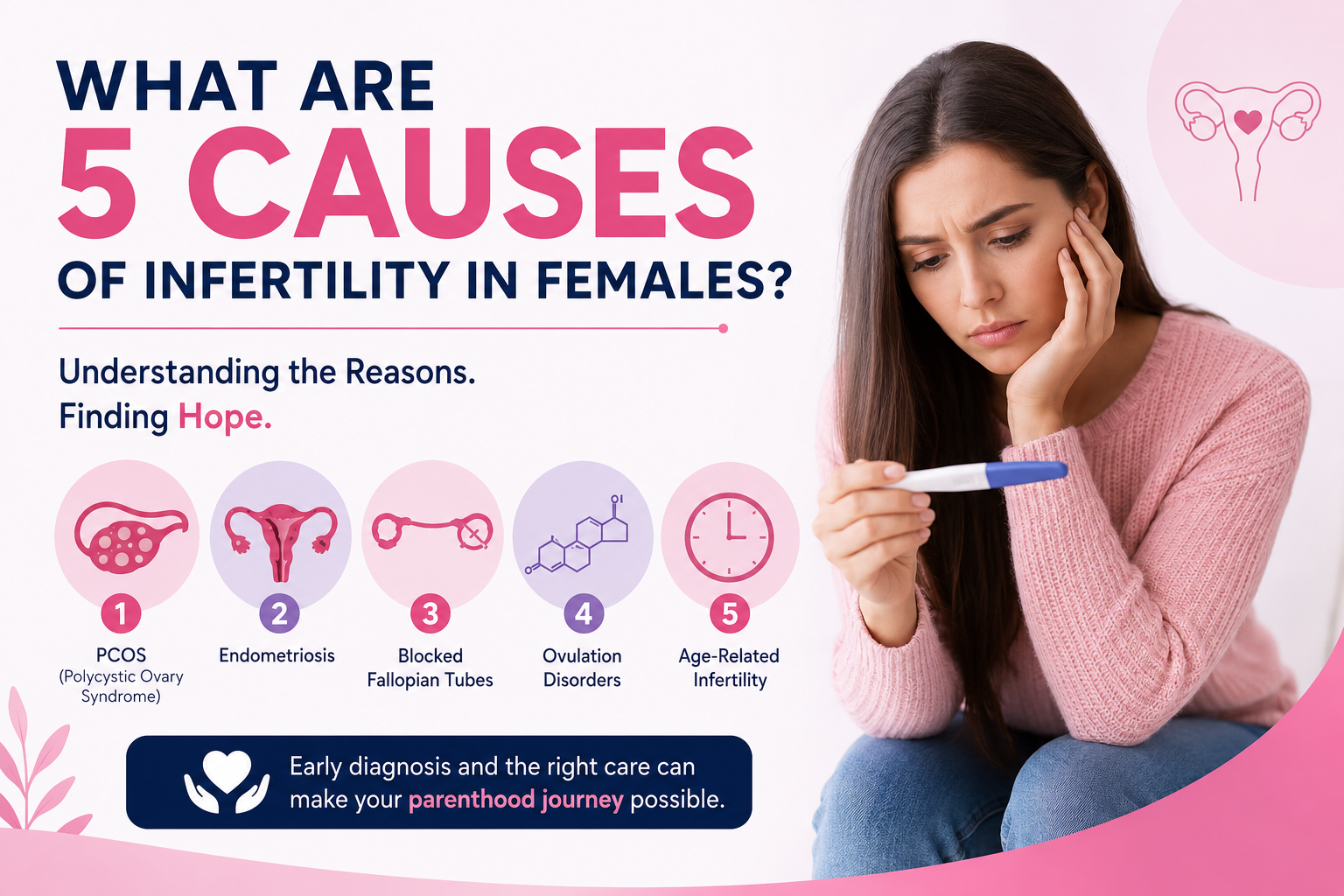
What Are 5 Causes of Infertility in Females?
Introduction
Infertility can feel like an emotional rollercoaster. One moment you are hopeful, and the next, you are overwhelmed with questions. If you have been trying to conceive for over a year without success, you are not alone. Millions of women across the world struggle with fertility issues, and understanding the reasons behind it is the first step toward finding the right solution.
Female infertility is not a single disease. It is more like a puzzle where different pieces affect the body’s ability to conceive naturally. Hormonal problems, lifestyle habits, age, and medical conditions can all play a role. The good news? Modern fertility treatments and guidance from the best ivf doctor in new delhi can help many women achieve pregnancy successfully.
Learn the 5 major causes of female infertility, symptoms, diagnosis, and treatment options from the best ivf doctor in new delhi
What is Female Infertility?
Female infertility is when the woman is not able to conceive after trying for a minimum of 12 months without protection during regular sexual relations. If a woman is over 35 doctors can begin evaluating fertility after six months after trying.
Imagine the reproductive system as an orchestra that is carefully orchestrated. If any instrument is not in tune then the entire orchestra could be affected. In the same way, pregnancy demands regular ovulation, healthy ovaries and open fallopian tubes. hormonal balance, and an uterus that is healthy.
Any interruption in this process could cause conception to be difficult.
How Common is Female Infertility?
Infertility is more widespread than most people think. According to studies conducted by medical professionals about 1 out of 6 couples experience fertility issues at the time of their marriage.
Infertility in females can occur because of:
- Hormonal imbalance
- Ovulation issues
- Reproductive organs: structural issues
- Poor egg quality
- Medical ailments
- Lifestyle habits
The advancements made in the field of reproductive health have allowed treatments to be more effective than they ever were.
Cause #1 - Polycystic Ovary Syndrome (PCOS)
What is PCOS?
PCOS is among the main causes of infertility among women. PCOS is a hormonal condition in which the ovaries release excess male hormones, which can affect the normal process of ovulation.
Women who suffer from PCOS can develop small cysts on their ovaries, and suffer from irregular menstrual cycles.
Symptoms of PCOS
- Periods that are irregular
- Weight loss
- Acne
- Hair loss on the face is excessive
- It is difficult to become pregnant
- Hair loss
How PCOS Causes Infertility
Ovulation is a must to conceive. In PCOS the ovaries might not release eggs on a regular basis and this can cause difficulties in conception.
Treatment Options
- Management of weight
- Fertility treatments
- Hormone therapy
- IVF treatment is required if necessary.
Many women suffering from PCOS can successfully conceive after receiving the proper medical care from the most effective ivf doctor in Delhi.
Cause #2 - Endometriosis
What is Endometriosis?
Endometriosis is a condition in which tissue that is that is similar to the inside of the uterus expands out of the uterus. The condition may be a problem for the ovaries, fallopian tubes, as well as pelvic organs.
It is extremely painful and can cause problems with fertility.
Common Symptoms
- Menstrual cramps with severe intensity
- Pain during intercourse
- Massive bleeding
- Pelvic pain
- Infertility
How Endometriosis Affects Fertility
The abnormal tissue could result in scarring, inflammation and obstruction in reproductive organs. It can also impact the quality of eggs and the process of implantation.
Treatment Options
- Pain medication
- Hormonal therapy
- Laparoscopic surgery
- IVF treatment
The early detection of a problem can greatly improve the chance of pregnancy.
Cause #3 - Blocked Fallopian Tubes
What Are Fallopian Tubes?
The fallopian tubes connect the Ovaries and the uterus. They are the route through which eggs travel following ovulation.
Why Tubes Get Blocked
Blocked tubes could result from:
- Pelvic infections
- Sexually transmitted infections
- Previous surgeries
- Endometriosis
- Tuberculosis
How It Impacts Pregnancy
In the event that tubes become blocked, sperm can't connect with the egg, which makes the natural process of conception unattainable.
Imagine driving down one of the roads that abruptly ends with the wall. This is the reason that fallopian tubes that are blocked stop fertilization.
Diagnosis
Doctors usually detect blocked tubes using:
- HSG test (Hysterosalpingography)
- Ultrasound
- Laparoscopy
Treatment
- Tubal surgery
- Fertility treatments
- IVF that bypasses the tubes completely
Cause #4 - Ovulation Disorders
What Are Ovulation Disorders?
Ovulation disorders occur when eggs are not released consistently or correctly from the ovaries.
Possible Causes
- Hormonal imbalance
- Thyroid disorders
- Stress
- Poor nutrition
- Excessive exercise
- Premature ovarian failure
Symptoms
- Periods that are irregular
- Periods missed
- Periods of heavy or light
- The difficulty of conceiving
Treatment
The treatment is based on the root reason and could include:
- Hormone therapy
- Induction of ovulation medications
- Lifestyle shifts
- IVF treatment
If treated properly Many women can have a normal cycle of ovulation.
Cause #5 - Age-Related Infertility
Why Age Matters
The woman's fertility naturally decreases as she ages, particularly after the age of 35.
Women are born with a small amount of eggs and both the number and quality diminish with time.
Effects of Aging on Fertility
- Quality of eggs reduced
- Risk of miscarriage increases
- IVF success rates are lower. IVF success rates
- Hormonal changes
When to Seek Help
If you're over 35 and are unable to get pregnant after six months, you need to speak with a fertility specialist immediately.
The earlier fertility concerns are dealt with, the better the chance of a successful pregnancy.
Lifestyle Factors That Affect Fertility
Occasionally, daily habits influence the reproductive health.
Common Lifestyle Factors
Smoking
Smoking harms egg quality and decreases fertility.
Alcohol Consumption
Excessive alcohol can disrupt hormonal balance.
Obesity
Obesity can affect the hormone levels and ovulation.
Stress
Chronic stress may affect the hormones that regulate reproduction.
Poor Diet
Deficiencies in nutrition can affect fertility.
Lifestyle choices that are healthy can boost fertility naturally and aid in medical treatments.
Symptoms of Female Infertility
Women do not always show apparent signs. But, warning signs are:
- Menstrual cycles that are irregular
- Severe period pain
- Hormonal changes
- Pelvic pain
- Pain during intercourse
- Numerous mishaps
If you are experiencing these symptoms It is recommended to seek out a fertility expert.
How Doctors Diagnose Infertility
Modern fertility tests can help discover the root of infertility.
Common Diagnostic Tests
Blood Tests
Monitor the levels of hormones and ovarian function.
Ultrasound
Examining the uterus and ovaries.
Ovulation Testing
Egg release tracks.
HSG Test
It detects obstructions in the fallopian tubes.
Laparoscopy
Helps to diagnose pelvic issues.
A precise diagnosis is the basis of a successful treatment.
Treatment Options for Female Infertility
The treatment will depend upon the reason, age and general health of the woman.
1. Fertility Medications
These drugs boost ovulation and increase egg production.
2. Hormonal Treatments
Hormones are used to regulate menstrual cycles and ovulation.
3. Surgery
Surgery can eliminate cysts, fibroids, as well as scar tissue.
4. Intrauterine Insemination (IUI)
Sperm that is specially prepared for use is inserted directly into the uterus.
5. In Vitro Fertilization (IVF)
IVF is among the most advanced fertility treatments that are available today.
During IVF:
- Eggs are collected from Ovaries.
- Fertilization happens in the laboratory
- Healthy embryos are inserted into the uterus
When choosing the most effective ivf physician in New Delhi will increase the success of treatment and offer emotional help throughout the process.
When to Visit a Fertility Specialist
Consult a doctor for advice if:
- You're under 35 and have been trying for more than 1 year.
- You're older than 35 and have been trying for more than 6 months.
- You experience irregular menstrual cycles.
- There is an extensive past of miscarriages
- The pelvic area is painful or endometriosis
Medical advice given early can avoid delay in treatment.
Tips to Improve Fertility Naturally
Although infertility problems are not always a problem that are preventable, a good habits can increase the quality of your fertility health.
Simple Fertility Tips
- Maintain your weight in a healthy range.
- A balanced diet is essential.
- Exercise regularly
- Rest comfortably
- Reduce stress
- Do not smoke or drink.
- Monitor the cycles of ovulation
Little changes can result in a significant change.
Emotional Impact of Infertility
Infertility goes beyond physical. It can also impact your emotional health.
A lot of women suffer from:
- Anxiety
- Depression
- Stress
- Problems with relationships
Be aware that seeking support for your emotional needs is as crucial as seeking medical care. Engaging in open dialogue with your family, friends or counselor can ease the burden of emotional suffering.
There is no one else to share this journey.
Conclusion
Female infertility may be due to a variety of reasons The five most commonly cited causes are endometriosis, PCOS, obstruction of the fallopian tube Ovulation disorders, the decline in fertility due to age..
The most important thing to remember is that infertility should not suggest the end of hope. With the advancement of modern medicine and lifestyle modifications, along with advice from the most effective ivf physician in New Delhi Many women are able to get pregnant and have healthy families.
Knowing your body's constitution, recognizing signs early and seeking prompt medical treatment can have a major impact in the outcome of fertility.
FAQs
1. Female infertility can be successfully treated?
Yes, there are many causes for female infertility can be addressed through surgery, medication lifestyle modifications, or fertility treatments like IVF.
2. Is there a most frequent cause of infertility among women?
PCOS is regarded as to be one of the primary factors that cause female infertility since it can affect ovulation.
3. At what age do female fertility drop dramatically?
Female fertility typically begins to decline at around 30 and decreases more quickly at 35 years old.
4. What can I do to tell whether I'm having problems with fertility?
Infertility, discomfort in the pelvis, hormonal problems or inability to get pregnant after a year can suggest fertility issues.
5. Does IVF the only treatment option for infertility?
Yes, IVF is not the only alternative. Treatments are based on the root reason and could involve medications surgical procedures, as well as IUI prior to when IVF is deemed to be a viable option.
 Russian
 English
 Arabic
 French
 Spanish
 Portuguese
 Deutsch
 Turkish
 Dutch
Dutch
 Italiano
 Romaian
 Portuguese (Brazil)
 Greek
Greek